Breakthrough in Quantum Computing: Logical Qubit Survival Rate Reaches 96% on IBM Heron Processor
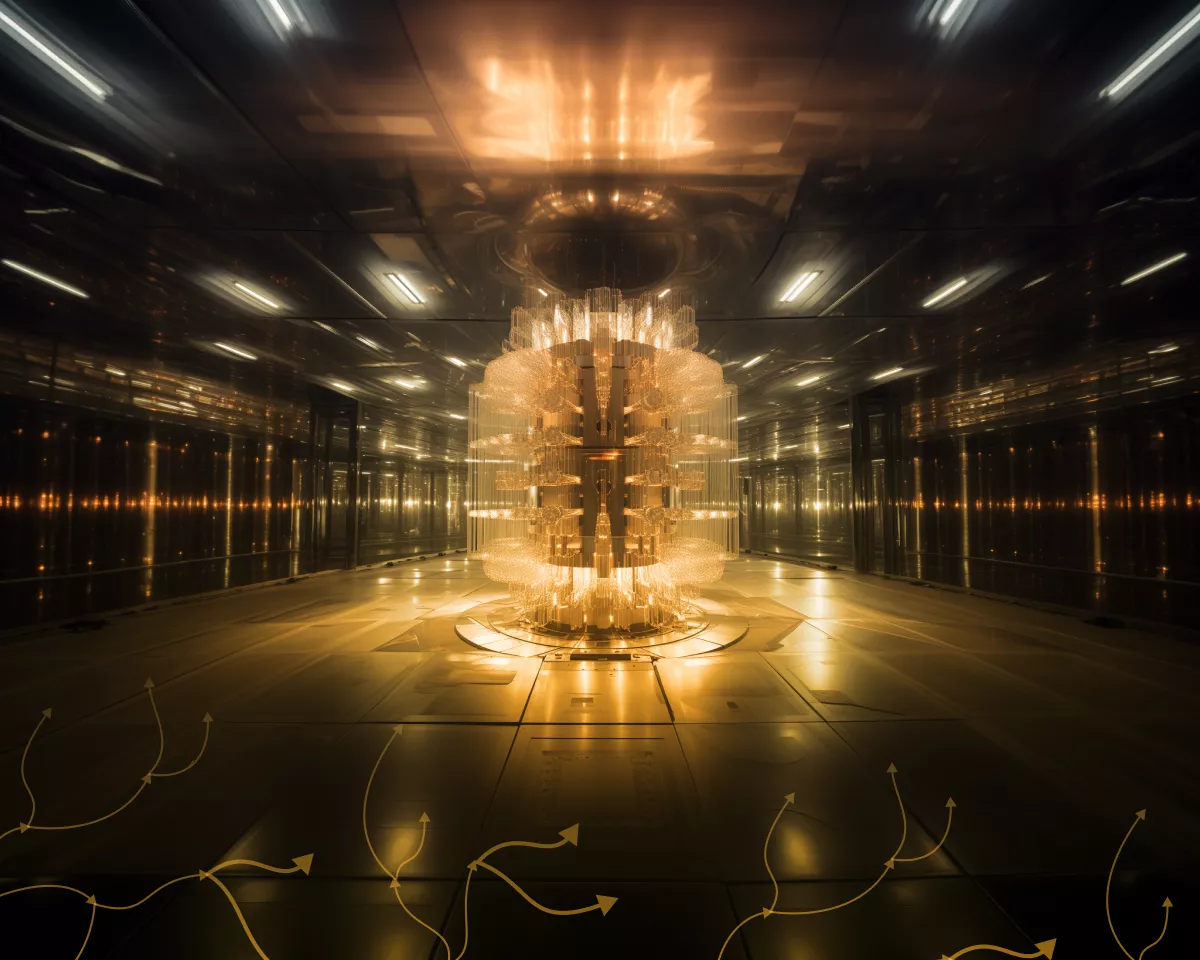
A group of researchers from the University of Sydney, together with IBM engineers, has made a significant step forward in the field of quantum computing. They managed to increase the preservation of logical qubits to 96% on the advanced 156-qubit superconducting processor IBM Quantum Heron r2. This result was achieved through the introduction of a new, more efficient error correction mechanism.
The key problem that was solved was the so-called "idle noise." In modern quantum systems, maintaining stability and correcting errors requires regular intermediate measurements of qubits. However, during such pauses, the remaining components of the processor lose stability, which itself generates new failures. This effect has long remained a serious obstacle to creating fault-tolerant quantum machines (FTQC).
The physicists completely redesigned the architecture of the correction circuits, radically reducing the time of forced computation stops. Optimization of the algorithms made it possible to raise the survival rate of logical qubits per error correction cycle from less than 90% to an impressive 96%. As project leader Stephen Bartlett, director of Sydney Nano, notes, this process is repeated many times at each stage of computation, and any forced downtime becomes a "serious obstacle" to reliable operation.
Practical Significance and Prospects
Although the result was obtained in laboratory conditions on a single processor, its significance for the entire industry is difficult to overestimate. Scalability and fault tolerance remain the main barriers to transitioning quantum computing from the experimental to the practical realm. Recall that IBM previously announced plans to achieve the first confirmed cases of quantum advantage by the end of 2026. Achieving a preservation level of 96% is not just a technical success, but a critically important step towards creating stable and commercially viable quantum systems.
My expert commentary: This development demonstrates that the main problem of quantum computing today is not so much the raw power of processors, but rather the management of quantum states and error correction. The breakthrough by the University of Sydney and IBM is a clear signal to the market: we are approaching the moment when quantum computing will cease to be just a theoretical concept and will begin to have a real impact on areas such as cryptography, materials science, and pharmaceuticals. Investors and developers should closely monitor progress in this field.