Breakthrough in quantum computing: logical qubit survival rate reaches 96% on IBM Heron processor
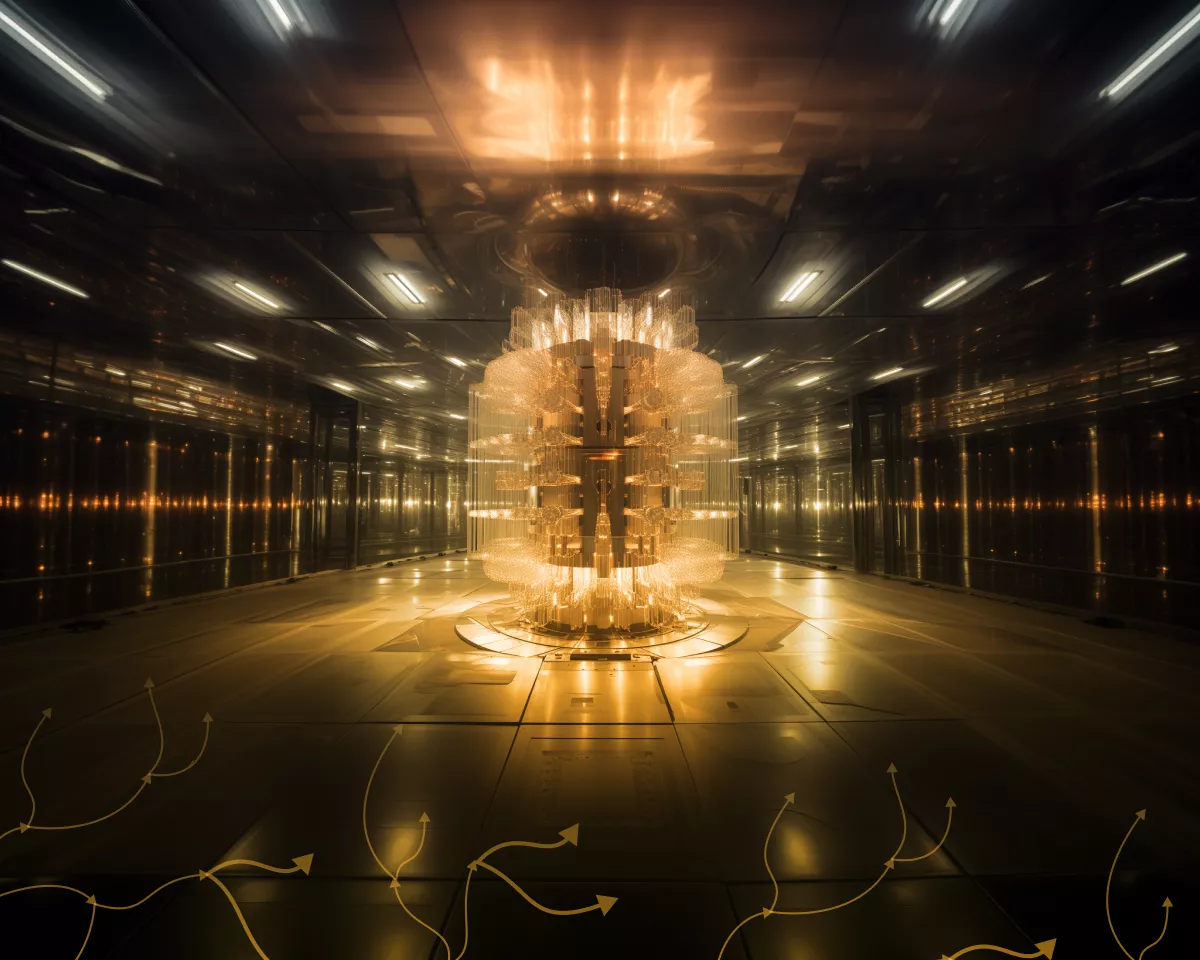
Quantum computing takes another decisive step forward. In a joint effort by specialists from the University of Sydney and IBM engineers, an impressive result was achieved: the survival rate of logical qubits during error correction was increased to 96%. This became possible thanks to the introduction of a fundamentally new mechanism that solves one of the most insidious problems of modern quantum systems — the so-called "idle noise."
The essence of the problem is as follows. To maintain coherence and correct errors, a quantum processor must regularly pause computations to perform internal measurements of the qubit state. However, during these critical pauses, the remaining elements of the system lose stability, leading to the accumulation of new errors, negating correction efforts. It is this "idle noise" that has long remained the main barrier to fault-tolerant quantum computing (FTQC).
The research team completely redesigned the architecture of error correction circuits, drastically reducing the time of forced pauses. The new method was tested on the advanced 156-qubit superconducting processor IBM Quantum Heron r2. The result exceeded expectations: the survival rate of logical qubits per correction cycle increased from less than 90% to a stable 96%. These are not just numbers — this is a demonstration that the scalability of quantum machines is becoming an increasingly achievable goal.
It is worth emphasizing that, despite the laboratory nature of the experiment, this achievement is of critical importance for the entire industry. Eliminating "idle noise" opens the way to creating more complex and long-lived quantum circuits. I recall that IBM previously announced plans to demonstrate the first confirmed cases of quantum advantage by the end of 2026. Such breakthroughs in error correction are not just a scientific victory, but a necessary foundation for these ambitious plans to become a reality.
My comment: The increase in survival rate from 90% to 96% may seem modest, but in the world of quantum computing, every percentage point is a colossal step. If such improvement rates continue, we could see the first commercially significant FTQC systems as early as the beginning of the next decade, which will radically change the landscape in cryptography, materials science, and financial modeling.