Breakthrough in Quantum Error Correction: Logical Qubit Survival Rate Reaches 96% on IBM Heron
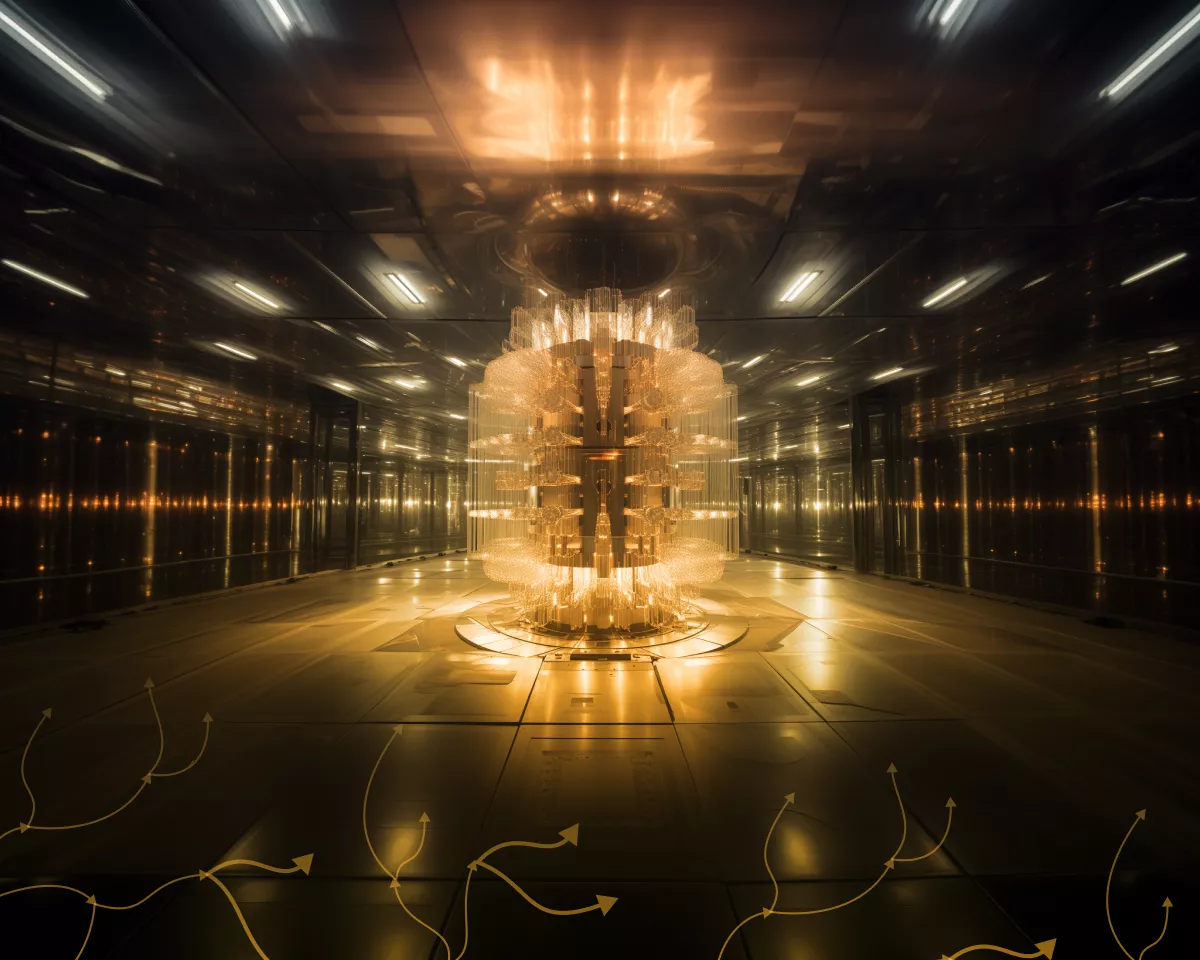
Quantum computing is taking a decisive step toward practical implementation. A team of researchers has managed to increase the preservation of logical qubits to 96% on the latest 156-qubit superconducting processor, the IBM Quantum Heron r2. This is a significant improvement over previous figures, which did not reach 90%.
The main stumbling block on the path to fault-tolerant quantum computing (FTQC) is the so-called "idle noise." It occurs when the system is forced to perform intermediate measurements of qubits for error correction. During these pauses, the remaining components of the processor lose stability, generating new failures. This creates a vicious cycle where the attempt to correct an error itself generates new ones.
New Error Correction Architecture
To solve this problem, physicists completely redesigned the architecture of correction circuits. The key innovation was a radical reduction in the time of forced computation halts. Algorithm optimization made it possible not only to reduce noise levels but also to significantly increase the accuracy of logical qubits per error correction cycle — from less than 90% to 96%.
This process is repeated multiple times at each stage of computation. As the project lead notes, forced idle time of components becomes a serious obstacle to reliable operation. Although the result was obtained in laboratory conditions on a single processor, its significance for the industry is hard to overestimate.
This achievement is not just an isolated success. It is a demonstration that scalability and fault tolerance, which remain the main barriers to quantum computing, can be systematically overcome. Recall that IBM previously announced plans to achieve the first confirmed cases of quantum advantage by the end of 2026. The current breakthrough in error correction makes these ambitious goals much more realistic.
Analyst's comment: Increasing qubit survival from 90% to 96% is not just about numbers. Behind this lies an exponential reduction in the number of physical qubits required to create one reliable logical qubit. If previously dozens of physical qubits were needed for correction, now, with improved baseline stability, we can drastically reduce these overhead costs. It is precisely such engineering solutions, not just theoretical breakthroughs, that are bringing the era of practical quantum computers closer.