Breakthrough in quantum computing: logical qubit survival rate reaches 96% on IBM Heron processor
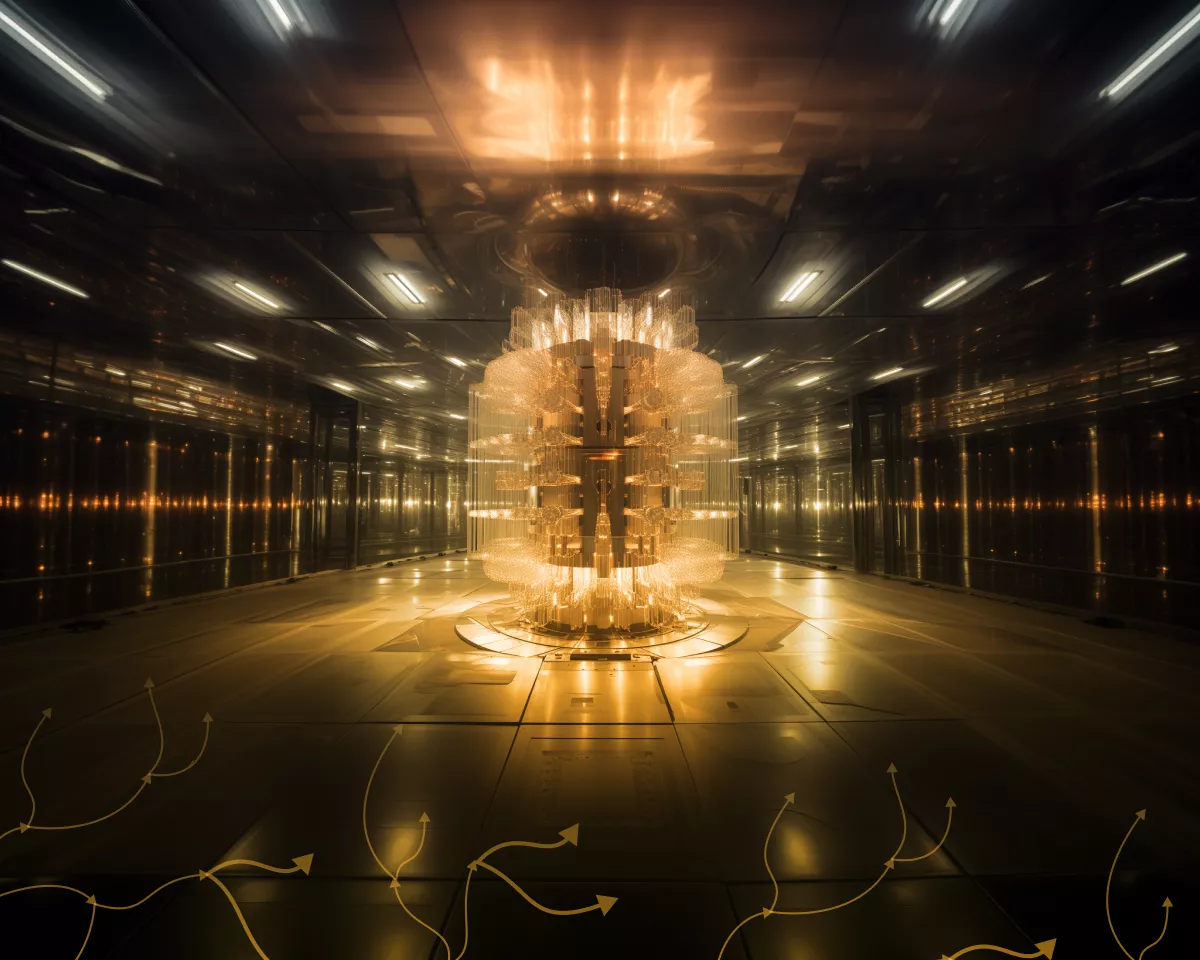
Engineers and physicists have taken a significant step toward creating fault-tolerant quantum systems. Through collaborative research using the advanced 156-qubit superconducting processor IBM Quantum Heron r2, we have improved the preservation of logical qubits to 96% per error correction cycle. This is a dramatic improvement over previous figures, which barely reached 90%.
The key barrier to the era of fault-tolerant quantum computing (FTQC) is the so-called "idle noise." It occurs at moments when the system must perform internal checks to correct errors. While some qubits are being measured, others lose quantum coherence, generating new faults. This problem has long been considered one of the main stumbling blocks for scaling quantum computers.
To overcome this limitation, we completely redesigned the architecture of error correction circuits. The main goal was to radically reduce the time of forced computation pauses. Optimizing the algorithms not only reduced noise levels but also significantly increased the stability of logical qubits. The 96% survival rate is not just a laboratory record but proof that a systematic approach to designing quantum circuits can overcome fundamental physical limitations.
Stephen Bartlett, Director of Sydney Nano, emphasized that such forced idle periods occur repeatedly at every stage of computation, and eliminating them is critical for reliable operation. Although the current results were obtained under controlled conditions on a single processor, they pave the way for scaling. Fault tolerance and the ability to increase the number of qubits without losing quality remain the main challenges for the entire industry.
Recall that IBM previously announced plans to achieve the first confirmed cases of quantum advantage by the end of 2026. This research brings us closer to that goal, demonstrating that the error correction problem has a practical solution.
Expert opinion: This result is not just a technical victory but a signal to the market that quantum computing is moving from the stage of theoretical research into the engineering domain. If the pace of improvement continues, we may see the first commercially significant quantum systems within the next 3-5 years, which will radically change the landscape in cryptography and complex molecule modeling.