Breakthrough in quantum computing: logical qubit survival rate reaches 96% on IBM Heron
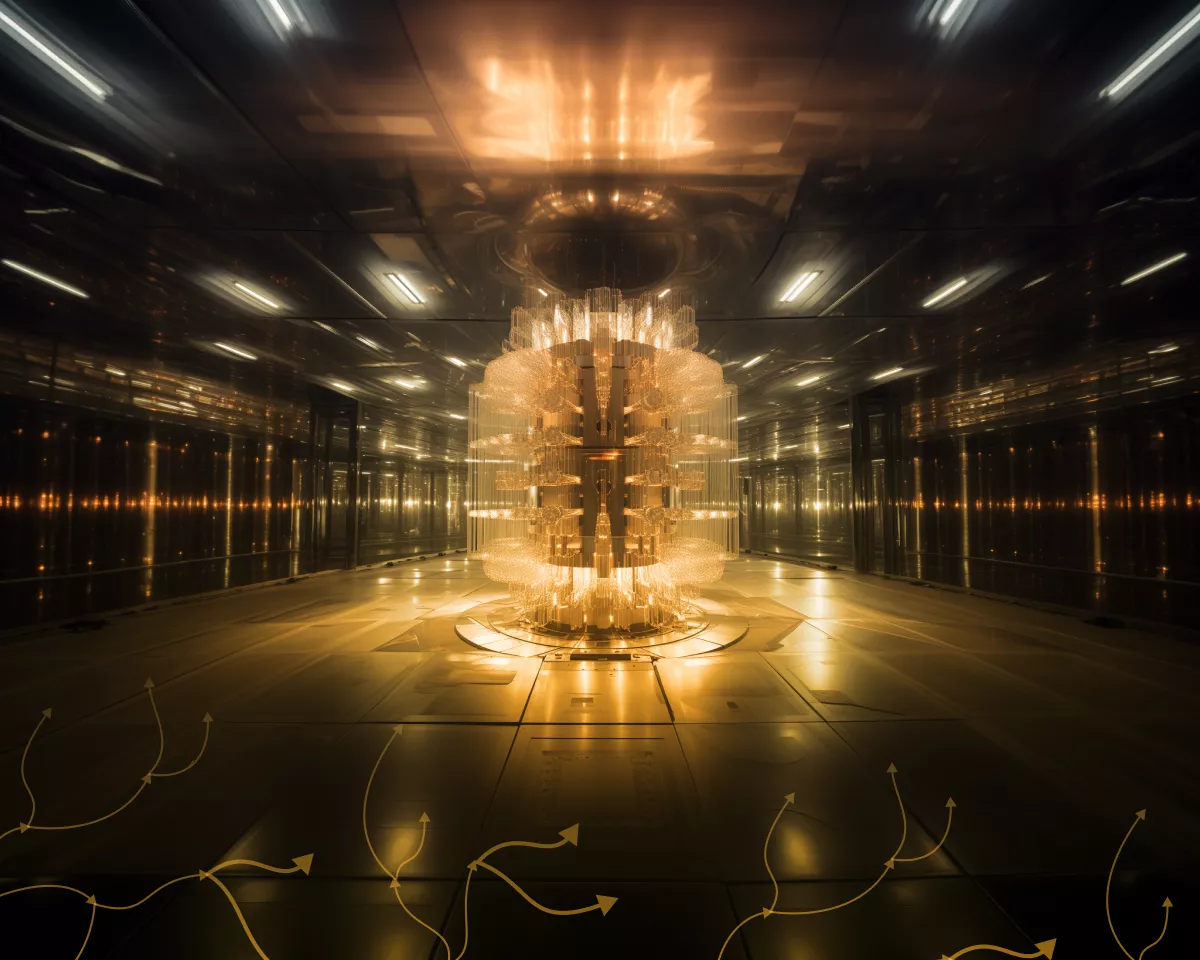
The world of quantum computing has received a powerful boost. A team of researchers from the University of Sydney, in collaboration with IBM engineers, has taken a significant step toward creating fault-tolerant machines. They have managed to increase the preservation of logical qubits to 96% on the advanced 156-qubit superconducting processor IBM Quantum Heron r2. This is substantial progress compared to previous figures, which rarely exceeded 90%.
The main enemy of stable quantum computing is the so-called "idle noise." The problem arises when the system is forced to perform intermediate measurements for error correction. During these pauses, the remaining qubits lose quantum coherence, leading to new errors. Physicists have radically solved this problem by redesigning the very architecture of the correction circuits. They drastically reduced the computation downtime, which allowed them to achieve such an impressive result.
The project leader, Professor Stephen Bartlett, rightly notes that forced idle time of elements is a "serious obstacle" to reliable operation. Each verification cycle is a risk of data loss. The new method minimizes this risk, bringing us closer to the era of fault-tolerant quantum computing (FTQC).
Practical Significance and Future Prospects
Although the result has so far been obtained in laboratory conditions on a single processor, its importance for the industry is hard to overestimate. Scalability and reliability remain the main stumbling blocks on the path to quantum supremacy. Recall that IBM has already announced plans to achieve the first confirmed cases of quantum advantage by the end of 2026. This breakthrough in error correction is another brick in the foundation of a future where quantum computers can solve problems inaccessible to classical systems.
Expert opinion: Increasing qubit survival from 90% to 96% is not just a number. It is a demonstration that we are moving from the "maybe" stage to the "it works" stage. If the pace of progress continues, we could see the first commercially useful quantum computing within the next 3-5 years. Investors in technology and blockchain should closely monitor these developments—they will change the rules of the game in cryptography and optimization.