Quantum Breakthrough: Logical Qubit Survival Rate Reaches 96% on IBM Heron Processor
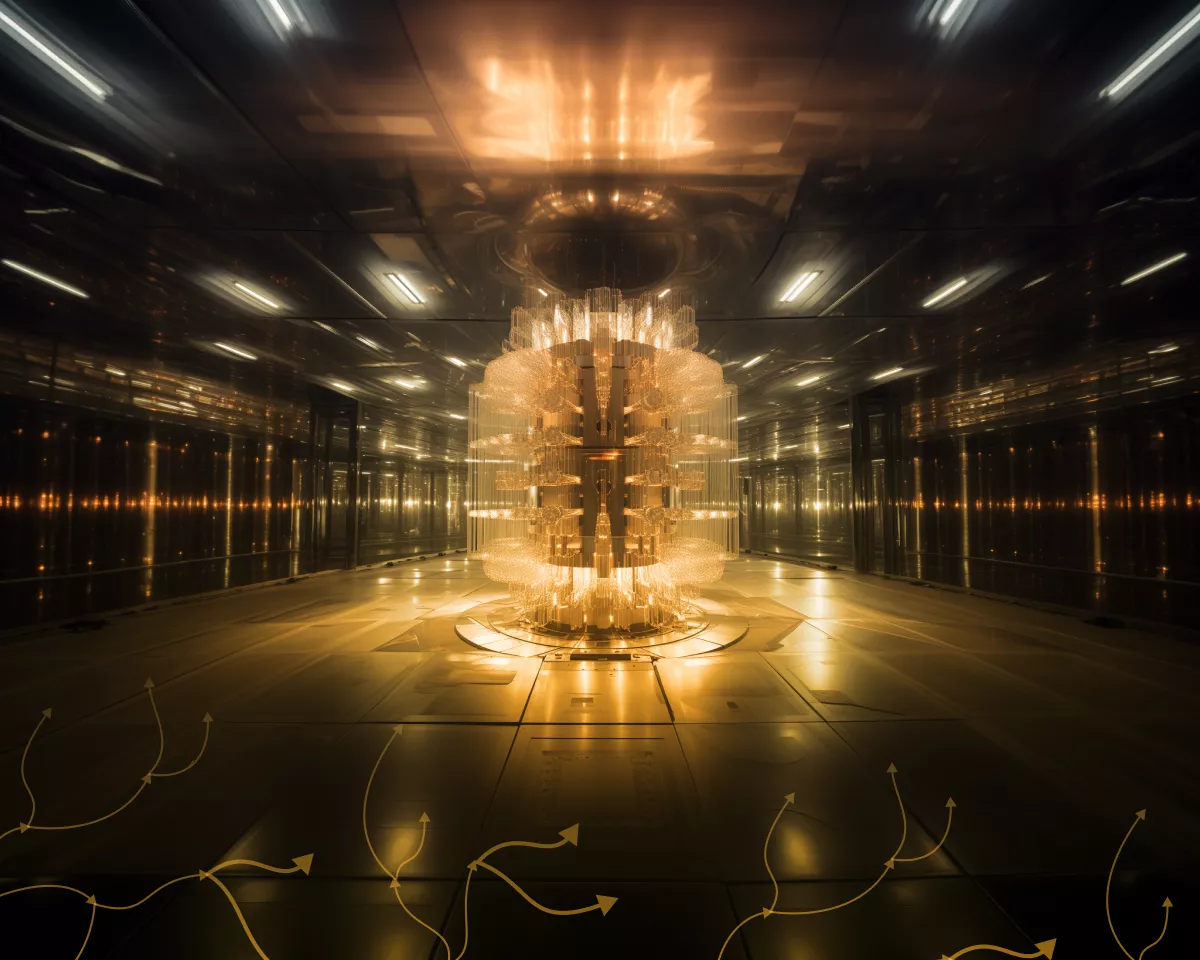
Quantum computing is on the verge of a new era, with fault tolerance emerging as a key factor. In recent experiments on the advanced 156-qubit superconducting processor IBM Quantum Heron r2, an impressive result was achieved: the survival rate of logical qubits over a single error correction cycle was increased from less than 90% to 96%. This is a significant step forward, bringing us closer to practical, scalable quantum systems.
The Main Enemy — "Idle Noise"
The primary obstacle to creating stable machines for the era of fault-tolerant quantum computing (FTQC) is the so-called "idle noise." In modern devices, to correct errors, the system is forced to regularly conduct internal checks. However, during such pauses, the remaining components of the processor lose stability, leading to new failures. This paradox — attempting to fix an error generates new ones — has long remained a serious problem.
A New Correction Architecture
To solve this problem, physicists completely redesigned the architecture of error correction schemes. The main goal was to radically reduce the time computation is halted. Thanks to algorithm optimization and a deep restructuring of the process, the survival rate of logical qubits was raised to 96%. It is important to understand that such a correction process occurs multiple times at each stage of computation, and every second of downtime is a potential loss of stability.
Although the result was obtained in laboratory conditions on a single processor, its significance for the industry is hard to overstate. Scalability and fault tolerance remain the main barriers to quantum computing. Earlier, in June, IBM had already made progress in the field of quantum error correction, and now we see concrete, measurable progress. The company has also planned to achieve the first confirmed cases of quantum advantage by the end of 2026.
Expert Comment: Achieving 96% survival is not just a number. It is a demonstration that "idle noise" can be controlled, not merely suppressed. If this approach can be scaled to thousands of qubits, we will witness a true turning point in the quantum race. Investors and developers should closely monitor the development of this technology — it will directly impact the future of cryptography and high-performance computing.