Breakthrough in quantum computing: logical qubit preservation reaches 96% on the IBM Heron processor
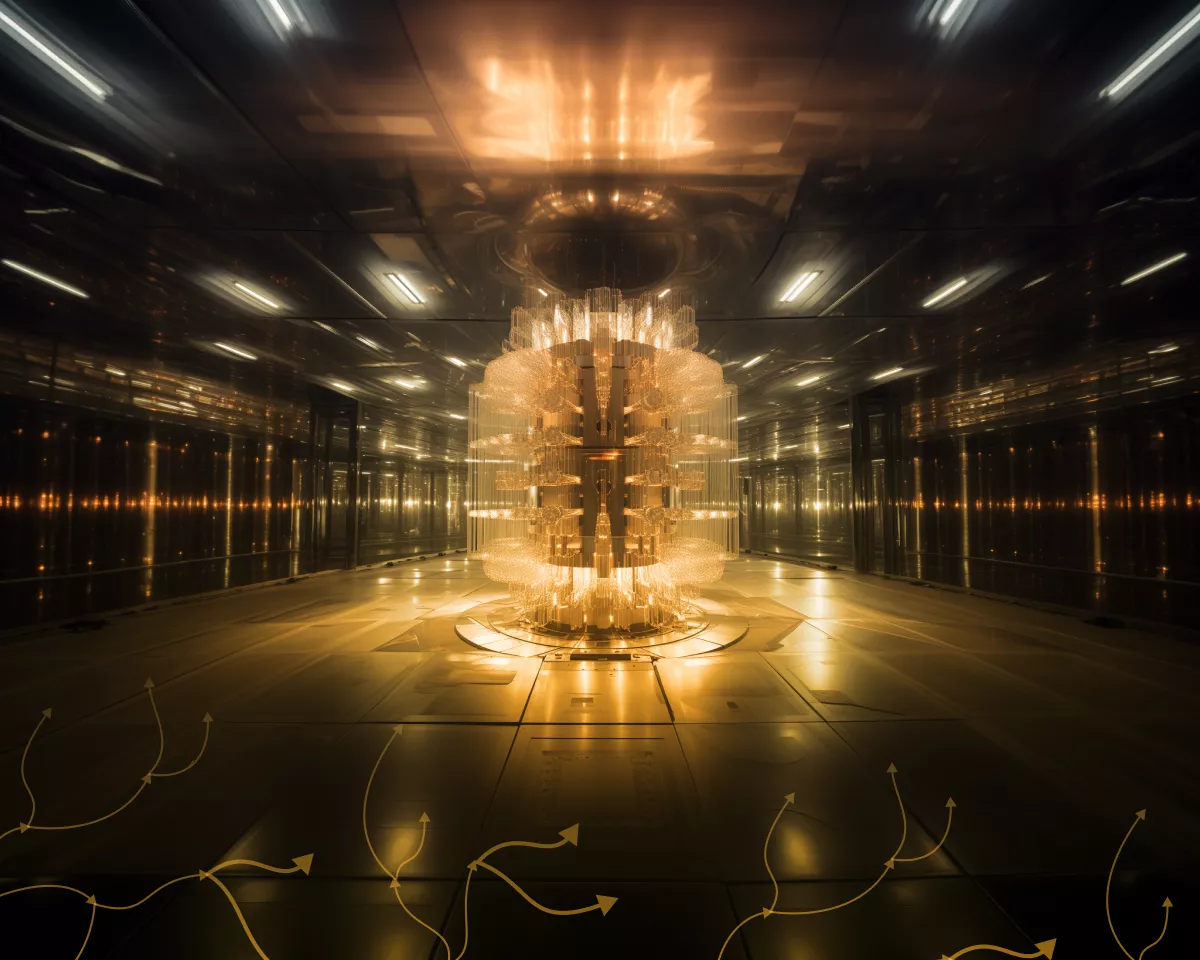
Quantum computing is approaching practical implementation: a group of researchers, in collaboration with IBM, has demonstrated a significant increase in the stability of logical qubits. The new error correction mechanism has boosted qubit survival rates to 96% on the latest model of the IBM Quantum Heron r2 quantum processor.
The main stumbling block on the path to fault-tolerant quantum computing (FTQC) is the so-called "idle noise." This problem arises during moments when the system performs intermediate measurements of qubits to correct errors. While one part of the processor is occupied with checking, the remaining elements lose stability, leading to new failures. This creates a vicious cycle that severely limits computational reliability.
To solve this problem, physicists completely redesigned the architecture of error correction circuits. The key achievement was a radical reduction in the downtime of computations during checks. The new method was tested on the 156-qubit superconducting processor IBM Quantum Heron r2. The results are impressive: the survival rate of logical qubits per error correction cycle increased from less than 90% to 96%.
Steven Bartlett, the project lead, emphasizes that the forced idle time of processor elements occurs repeatedly at each stage of computation and represents a "serious obstacle" to reliable operation. Optimizing this process is key to scaling.
Although this result was obtained in laboratory conditions on a single processor, the research direction is critically important for the entire industry. Scalability and fault tolerance remain the main barriers on the path to the era of quantum supremacy. Recall that IBM previously announced plans to achieve the first confirmed cases of quantum advantage by the end of 2026.
Expert opinion: Achieving 96% preservation is not just a number, but a crucial step toward creating commercially viable quantum systems. If the pace of progress continues, we may witness the first real-world applications of quantum computers in cryptography and materials science within the next few years.