Breakthrough in Quantum Computing: Logical Qubit Survival Rate Reaches 96% on IBM Heron Processor
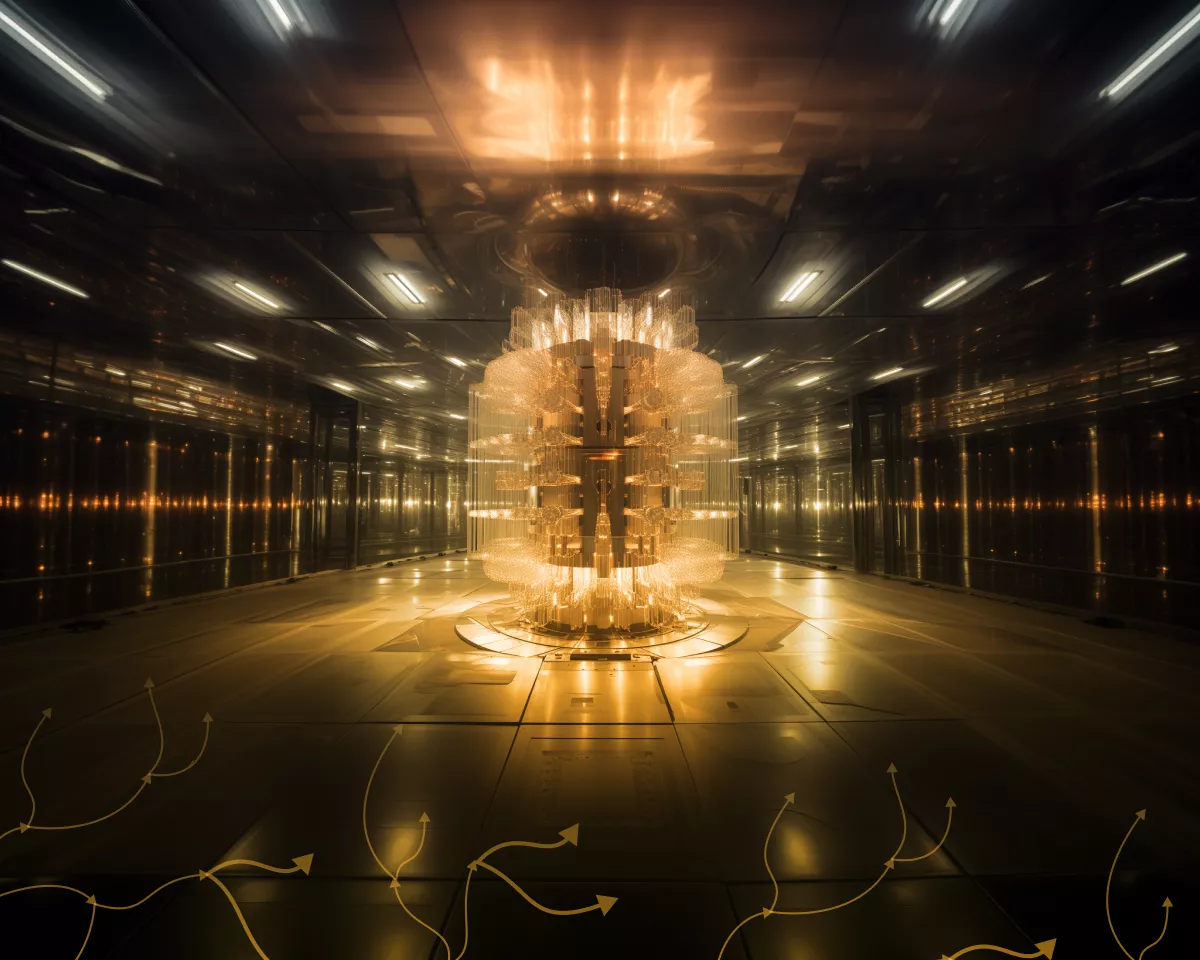
A group of researchers from the University of Sydney, together with IBM engineers, presented an impressive result: the survival rate of logical qubits has been increased to 96%. This achievement was made possible by introducing a fundamentally new error correction mechanism that addresses the key problem of "idle noise."
In modern quantum systems, the main obstacle to fault-tolerant quantum computing (FTQC) is the degradation of qubit states during pauses that are inevitable when performing intermediate measurements. While the system checks some elements, others lose stability, generating new errors. This paradox has long limited computational accuracy.
To overcome this barrier, physicists completely redesigned the architecture of correction circuits. The main goal is to radically reduce the processor's forced idle time. The new method was tested on the advanced 156-qubit superconducting chip IBM Quantum Heron r2. Algorithm optimization made it possible to increase the survival rate of logical qubits per error correction cycle from less than 90% to 96%.
Why This Matters for the Industry
Although the result has currently been obtained in laboratory conditions on a single specific processor, its significance for the entire industry is hard to overestimate. As project leader Stephen Bartlett noted, "idle noise" occurs at every stage of computation, and its elimination is the key to creating reliable machines.
Recall that in June, IBM already demonstrated progress in error correction, and by the end of 2026, the corporation plans to present the first confirmed cases of quantum advantage. The current achievement is a significant step toward scalability and fault tolerance, which remain the main technological barriers.
My analysis: The increase in survival rate from 90% to 96% is not just numbers. It means we are approaching the threshold beyond which quantum computing will become practically useful for cryptography and modeling complex molecules. If the industry can scale this approach, within the next 2-3 years we will see commercial quantum systems capable of solving problems inaccessible to classical supercomputers.