Vitalik Buterin has once again ventured into side experiments: assembled an anonymous billboard on Aztec
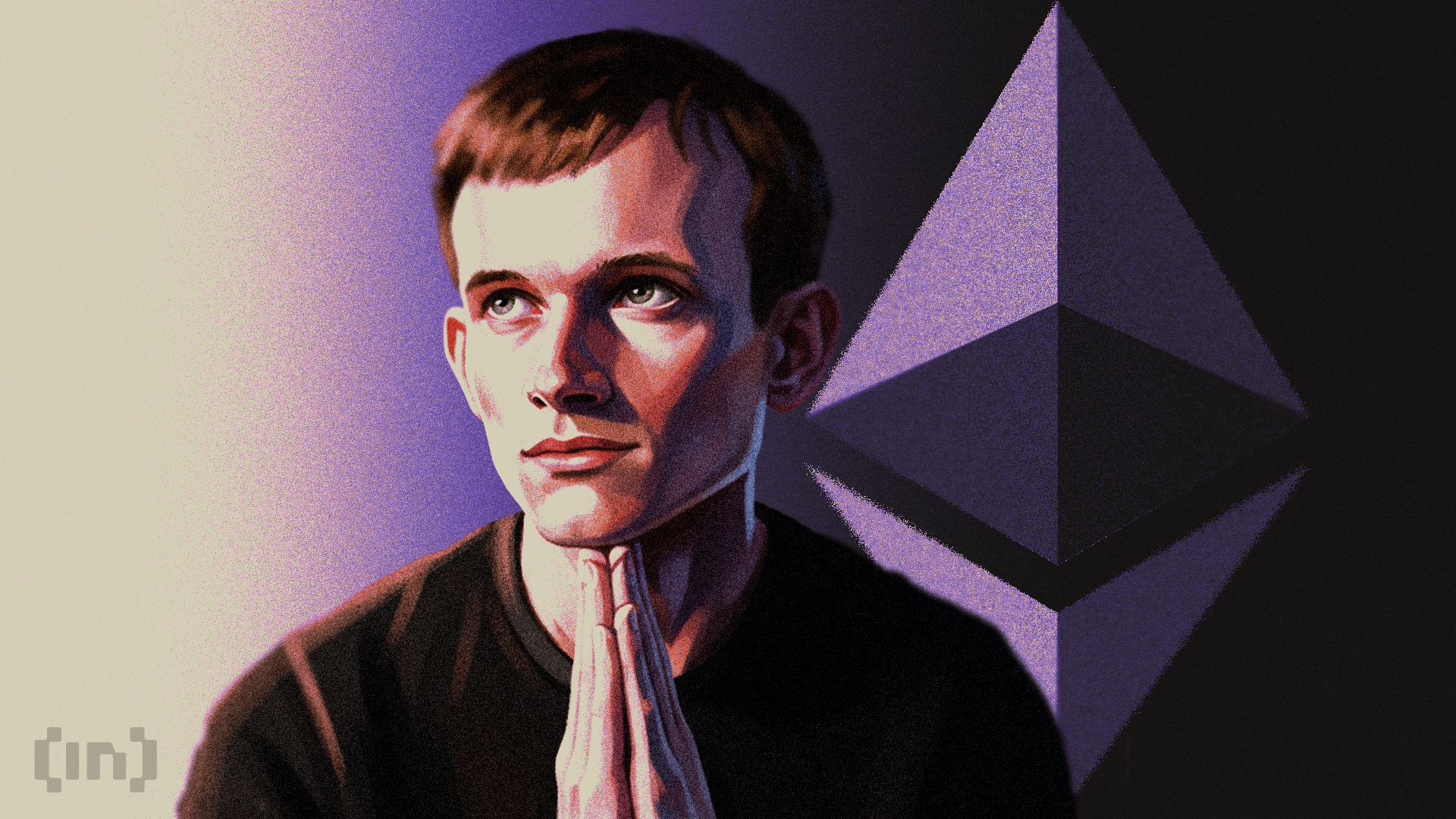
Ethereum's co-founder once again demonstrates that his true passion lies in cryptographic experiments, not public ETH marketing. This time, Vitalik Buterin presented a prototype of an anonymous bulletin board (billboard) built on zero-knowledge proof principles. The project, assembled in a vibe coding style where most of the code was written by AI tools and Buterin himself only set the direction, operates on the Aztec protocol — a second-layer solution for Ethereum focused on privacy.
The concept of such a billboard is not new. Buterin first described it back in 2022, proposing a model where users post messages anonymously, and moderators can remove violating content without knowing the author's identity. Now the idea has received a practical implementation. The aztec_experiments repository on GitHub contains three working prototypes: a token contract, a voting oracle, and the billboard itself.
How the anonymous billboard works
The mechanism is based on cryptographic "nullifiers" using the poseidon2 hash function. Before sending data to the blockchain, a private function checks with the associated token contract whether the user has the right to publish. The system blocks duplicate posts without revealing the author's identity. This creates a space for free communication where moderation is possible, but anonymity is guaranteed.
The term vibe coding, used by Buterin, was previously popularized by Andrej Karpathy, who recently joined Anthropic. This is an approach where the developer formulates the task in simple words, and neural networks generate the lion's share of the code. In the case of the billboard, this approach proved quite workable.
Buterin's usual style: experiments over marketing
A humorous post has already appeared on the billboard's demo version: the author asks why Buterin is engaged in curious projects instead of developing his own coin. And there is a great deal of truth in this joke. In 2026 (and earlier), Vitalik devotes almost all his time to third-party projects far from the mainstream course of Ethereum development. These include tasks for recognizing anonymous authorship, the first chapters of a novel about decentralized governance, and now — an anonymous billboard.
The ETH exchange rate this year is noticeably lower than the peaks of the last cycle, and Wall Street is much more willing to discuss the bullish prospects of the asset than the third-party ventures of its co-founder. Buterin does not seem bothered by this: he is more interested in cryptographic experiments than public support for the coin's price. He even admitted that he might one day release a fantasy novel under a pseudonym, where the same cryptography would prove his authorship, but the name would remain unknown.
Whether the billboard will remain a prototype is unclear. Judging by the change history on GitHub, Buterin continues to experiment just as actively. This means we will see many more such "side" projects, which may have a deeper impact on the industry than another round of ETH marketing.
Expert opinion: Such prototypes are not just a hobby. They demonstrate the maturity of Ethereum's infrastructure for creating truly private applications. If Aztec and similar solutions gain mass adoption, it is precisely these "experiments" by Buterin that could become the foundation for a new class of decentralized services where privacy is not an option but a basic function. The market is currently underestimating this development vector.