The UN has estimated the damage from scam networks at $114 billion: cryptocurrencies have become the financial backbone of crime.
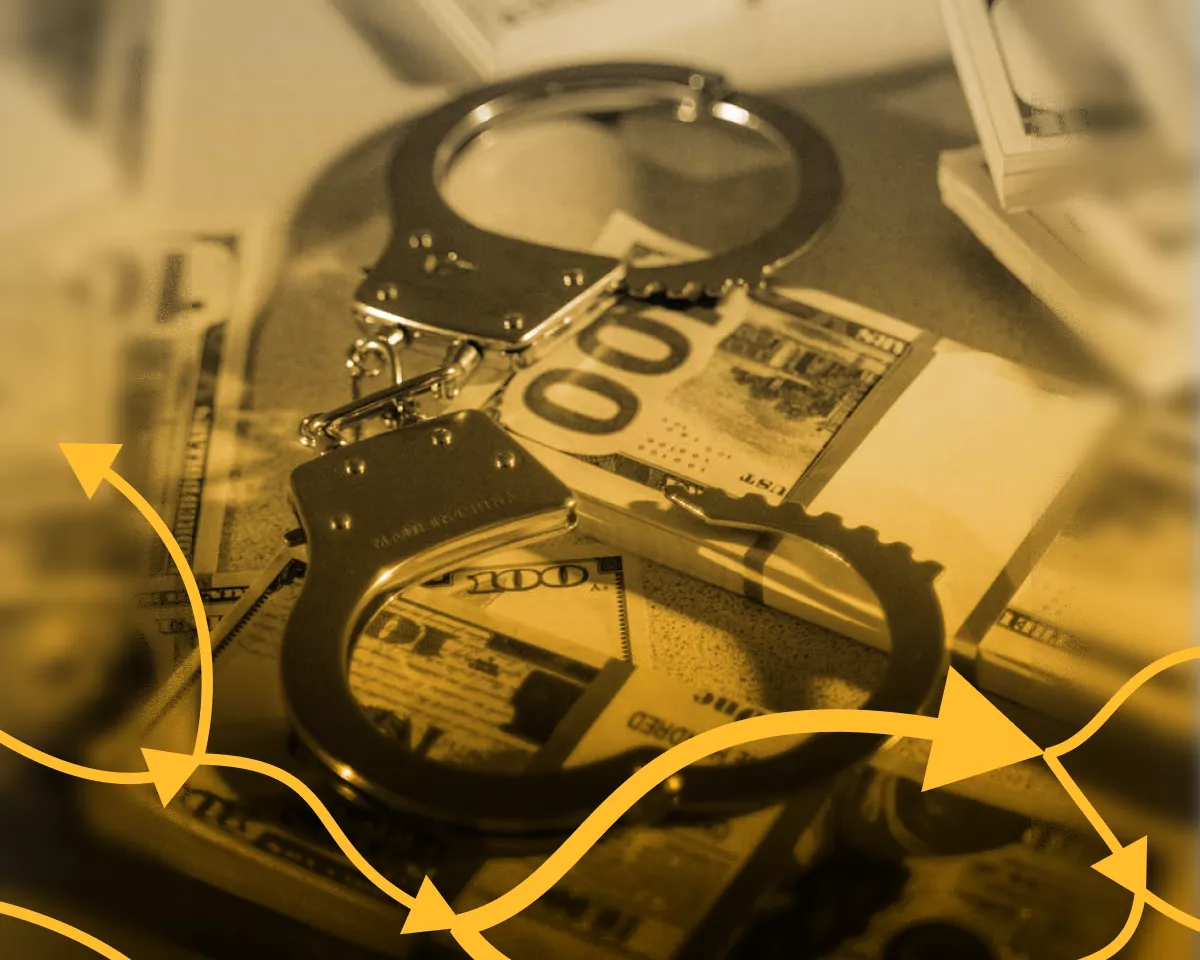
The scale of organized fraud in East and Southeast Asia, Australia, and New Zealand has reached astronomical levels. According to my data, based on an analysis of reports from international organizations, the total damage from scam operations in 2025 is estimated to range from $88.3 to $114.1 billion. These are not just numbers — they are a marker that we are witnessing a fundamental restructuring of the region's criminal economy.
To understand the dynamics: back in 2023, losses from similar schemes ranged from $18 to $37 billion. Thus, over two years, the volume of damage has roughly tripled. The leaders in officially recorded losses for 2024–2025 were China ($5.1 billion), South Korea ($3.5 billion), and Taiwan ($2.8 billion). However, these figures are just the tip of the iceberg, as the methodology accounts for both confirmed cases and the estimated share of victims who, for various reasons, do not contact law enforcement agencies.
A New Type of Criminal Economy
This is not about scattered groups, but about a full-fledged cross-border network with a unified infrastructure. This structure combines fraud, money laundering, human trafficking, and illegal migrant smuggling. In essence, we are seeing a model of "criminal franchising," where specialized "departments" for money laundering, data collection, and logistics operate as a single mechanism. The scale and complexity of this system are already outpacing existing countermeasures.
The foundation of this network remains large, isolated complexes — scam centers where people are forcibly detained and forced to work in investment and romance scams. A significant portion of these centers is concentrated in Cambodia, Laos, and Myanmar.
The Role of Cryptocurrencies: USDT as a New Financial System
The key conclusion I draw from this report is that cryptocurrencies, and especially the stablecoin USDT on the TRON network, have become the settlement infrastructure for this entire criminal ecosystem. This combination has created a parallel financial system for near-instant, cheap, and pseudonymous cross-border transfers. Criminal groups actively use P2P platforms, over-the-counter brokers, and underground banking networks to convert fiat into stablecoins and back, effectively bypassing bank controls.
Without the seizure of these digital assets, the fight against scam networks will be largely ineffective. Simply disrupting operations is pointless if criminals' profits remain safe.
Technology in the Service of Fraudsters
Criminal groups are actively adopting generative AI, deepfakes, and satellite communications (including Starlink). The use of legitimate advertising networks to distribute malware has increased by 42% over the year. This lowers the entry barrier for complex schemes: even small groups can now use AI translation, voice cloning, and real-time deepfake video.
The geography of recruitment is also expanding. Citizens of at least 80 countries have been identified in scam centers, and job advertisements increasingly require knowledge of European languages — German, French, Dutch. This is an alarming sign that the problem extends far beyond the Asia-Pacific region.
My commentary as an analyst: The cryptocurrency market, especially stablecoins, has found itself at the center of a confrontation between innovation and crime. While regulators and law enforcement try to catch up with technology, criminals have already created a global, censorship-resistant financial network. Without total transparency of blockchain transactions and international coordination on asset seizure, we risk witnessing a further escalation of this crisis.