Sunlight has been used for the first time to generate quantum entanglement: a breakthrough in photonic technologies.
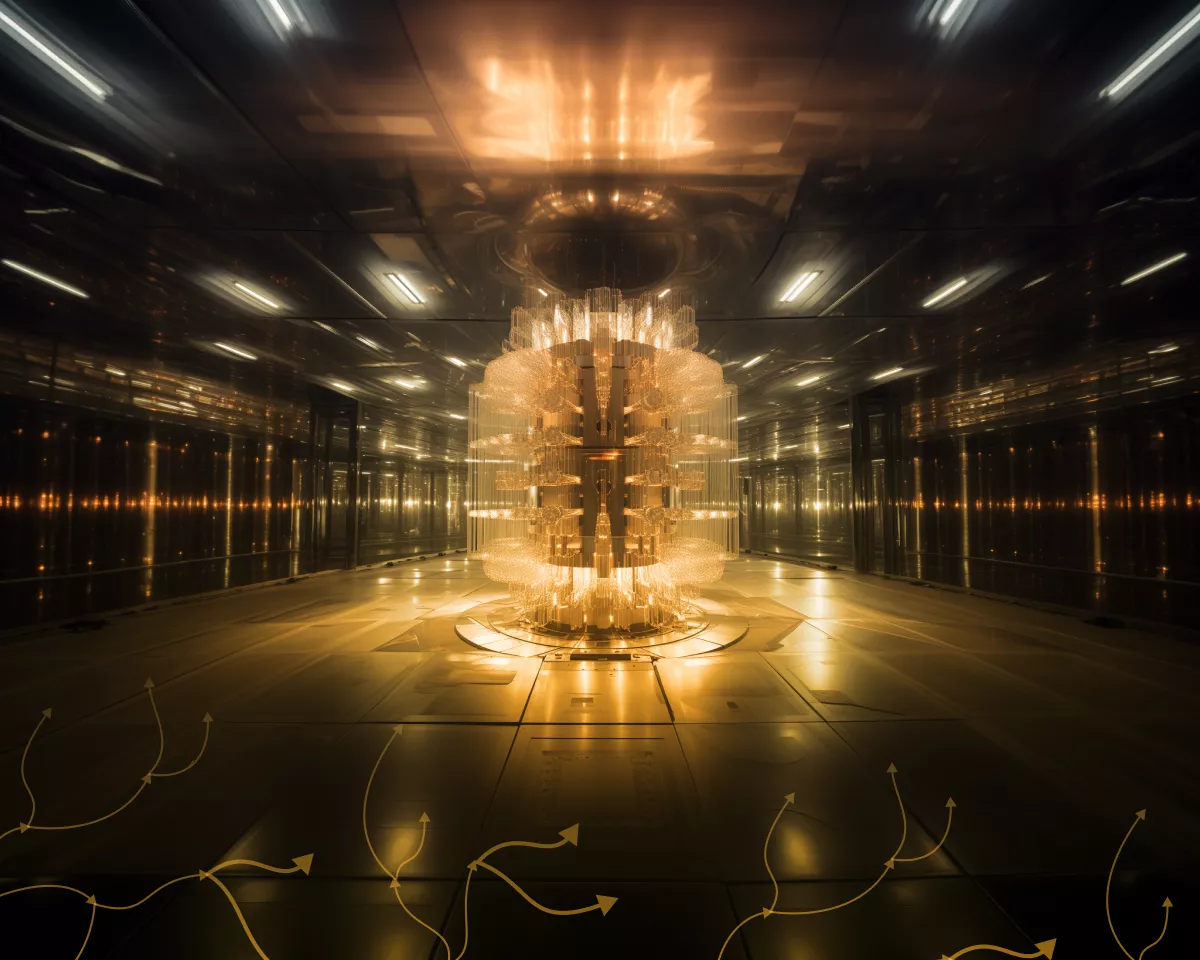
An international team of researchers has achieved what was recently considered impossible: concentrated sunlight has been successfully used to create pairs of quantum-entangled photons. The experimental results were published in the reputable scientific journal Optica, with leading specialists from the University of Ottawa and the Max Planck Institute for the Science of Light (Germany) among the authors.
The work is based on using solar radiation as a pump source for spontaneous parametric down-conversion, a classic method for generating entangled states. Until now, it was believed that lasers were indispensable here: their high coherence and power density seemed to be mandatory conditions. However, my analysis shows that this belief was overly conservative.
Incoherence is not a verdict
The key conclusion of the experiment: the spatial and temporal incoherence of sunlight is not a critical obstacle to generating polarization entanglement. It is sufficient for the light to maintain polarization and be effectively focused. This refutes the established dogma about the "indispensability" of lasers in quantum optics.
To achieve the result, the team created a complex concentration system: the radiation collection area was 1.4 square meters. The flux was focused by a Fresnel lens, then passed through a glass conical concentrator and multimode optical fiber, after which it was fed into a nonlinear crystal.
Results and prospects
At the output, the scientists recorded polarization-entangled photons with an accuracy of nearly 94% and correlations violating Bell's inequality. This is indisputable evidence of genuine quantum entanglement. Notably, the normalized generation efficiency turned out to be comparable to laser setups.
The practical significance of the work is enormous. The proposed approach can radically reduce the energy consumption of photonic quantum systems, which is critically important for applications where every watt counts. This concerns satellite platforms and interplanetary missions, where traditional laser sources are too costly.
This breakthrough paves the way for creating autonomous quantum communication systems operating on natural light. In the context of recent assessments by AWS, Nvidia, and NASA about the need for supercomputers for quantum computing, this achievement underscores that the future of quantum technologies could be far more energy-efficient than we assumed.
My expert opinion: this is not just a laboratory curiosity, but a strategic shift in the paradigm of quantum optics. Using sunlight instead of lasers could become a catalyst for the widespread adoption of quantum communications in the space industry, where energy efficiency is the key factor.