Sunlight has been used for the first time to create quantum entanglement: a breakthrough that changes the rules of the game.
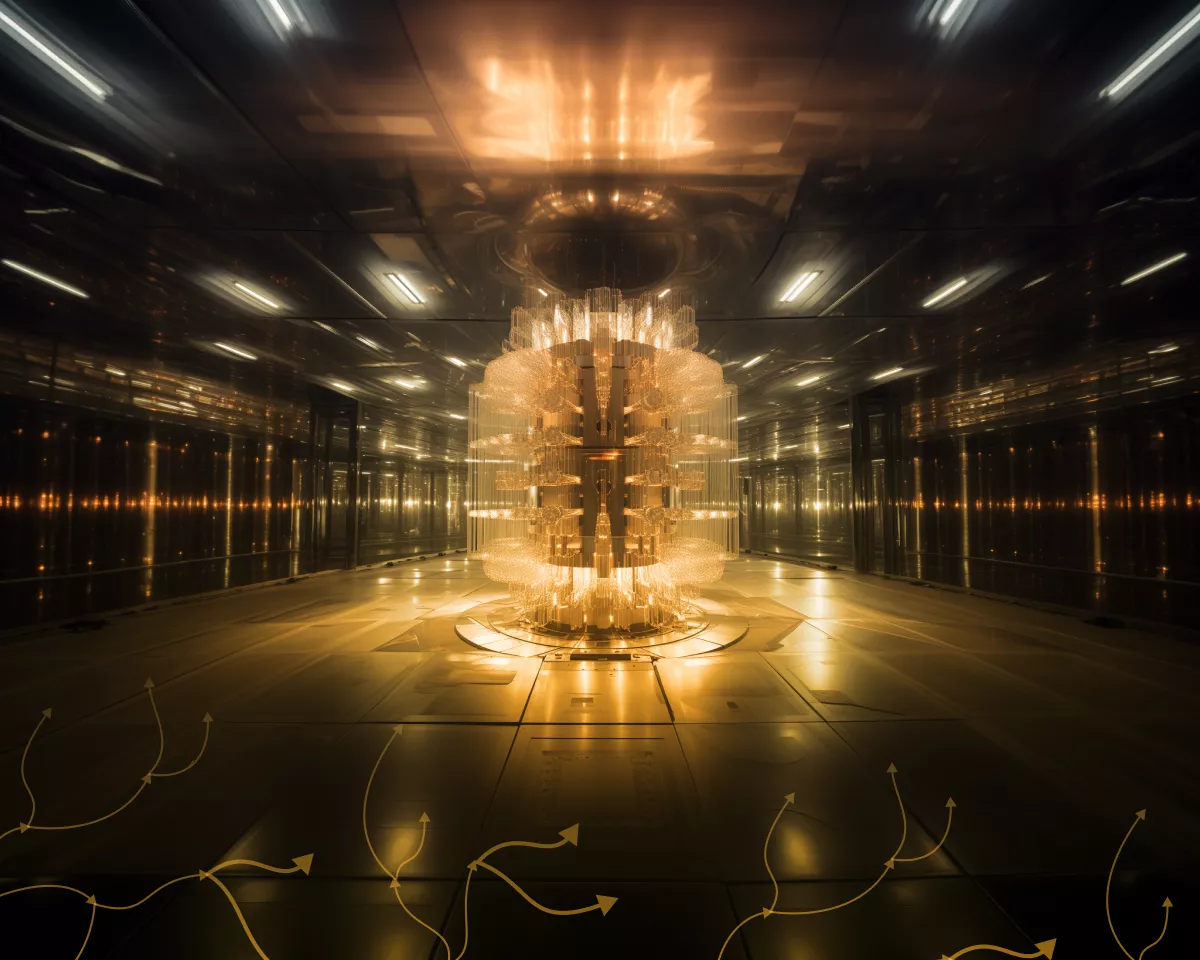
An international collaboration of physicists has achieved what was long considered impossible: they demonstrated that concentrated sunlight can generate pairs of quantum-entangled photons. This is not merely a laboratory curiosity but a serious challenge to the established paradigm that lasers are the only practical tool for preparing quantum states of light. The results of this work were presented in the reputable scientific journal Optica.
Lasers Are No Longer Monopolists in Quantum Optics
For a long time, it was believed that the high coherence and power density of laser radiation are mandatory conditions for processes such as spontaneous parametric down-conversion (SPDC), which is the standard method for obtaining entangled photons. However, my colleagues from the University of Ottawa and the Max Planck Institute for the Science of Light have convincingly shown that this is not the case. The key factor turned out to be not coherence, but polarization and the ability to focus the flux to sufficient intensity.
During the experiment, the team created a complex sunlight concentration system. The total collection area was 1.4 square meters. Light was collected using a Fresnel lens, then passed through a glass conical concentrator and a multimode optical fiber, after which it was directed into a nonlinear crystal. It was there that the birth of polarization-entangled photon pairs occurred.
Quantum Precision and Energy Efficiency
The results are impressive: the precision of generating entangled states reached nearly 94%, and the correlations between photons clearly violated Bell's inequality. This unambiguously confirms that we are dealing with genuine quantum entanglement, not classical statistical correlation. Most notably, the normalized generation efficiency turned out to be comparable to traditional laser setups.
From my point of view, this breakthrough opens up exciting prospects. If we can use natural sunlight to power photonic quantum systems, it will radically reduce energy consumption and simplify their integration in conditions where every watt counts. This concerns satellite platforms, deep space, and autonomous research missions, where lasers require too much energy and cooling resources.
This research is not just a step forward in laboratory practice; it is a fundamental rethinking of what light sources can be used in quantum technologies. We stand on the threshold of a new era where quantum optics will become more accessible and environmentally friendly than ever before.
My expert commentary: This work is a vivid example of how bold experiments destroy dogmas. Using light that is "dirty" in terms of coherence for pure quantum states is not just an engineering trick but a conceptual shift. It opens the way to creating autonomous quantum devices powered by renewable energy, which is especially critical for future orbital and interplanetary quantum communication networks.