Google DeepMind has created an AI agent for autonomous verification of scientific hypotheses.
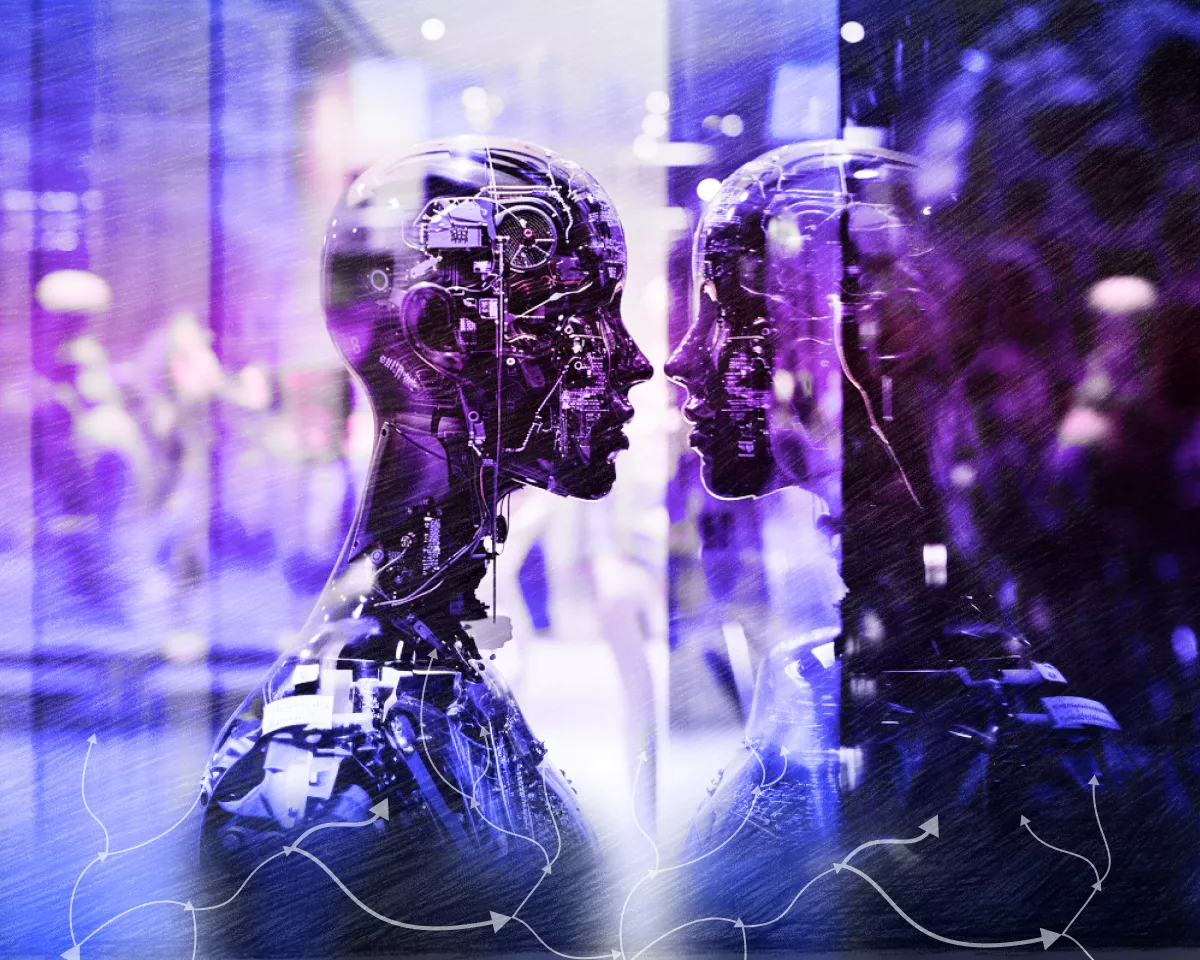
The scientific method is a cycle of formulating hypotheses, testing them, and refining them. Until now, this process required direct human involvement at every stage. However, a new development by Google DeepMind researcher Kevin Murphy is radically changing this paradigm. The system he introduced, called the Model Discovery Agent (MDA), is an autonomous AI assistant capable not only of generating potential mechanisms for the phenomena under study but also of independently planning and conducting experiments to verify them.
Operating Principle and Architecture
The key difference between MDA and standard machine learning algorithms lies in its active role. The agent does not simply analyze static data; it operates in a continuous "propose-experiment-update" loop. The system sequentially performs several functions: first, it generates a spectrum of possible explanations for the observed phenomenon, then it ranks them and selects the "most informative" next experiment that will best differentiate between competing hypotheses. After obtaining results, MDA revises its assumptions and begins a new cycle, gradually narrowing the search for truth.
Test Results
The effectiveness of the new approach was tested on tasks from three different scientific fields: physics, chemistry, and biology. During the trials, the digital assistant demonstrated impressive results, significantly outperforming existing methodologies on a key metric—the efficiency of model learning from experimental data. In other words, MDA spends fewer resources and less time conducting experiments to achieve the same level of understanding of patterns than traditional approaches.
This achievement opens new horizons for accelerating scientific discoveries. The ability to automate the routine part of the research cycle allows scientists to focus on more complex and creative aspects of their work, as well as to conduct experiments in areas where manual testing is too expensive or dangerous.
My view: The shift from passive data analysis to active experiment planning is a fundamental change in the application of AI to science. If MDA truly scales to more complex, interdisciplinary problems, we may witness the birth of a new type of "digital colleague" that not only processes information but participates in the very process of discovery. The question is how deeply such a system can understand context that goes beyond formalized data.