AI inventors vs. patent law: pharmaceuticals caught in the grip of legal contradictions
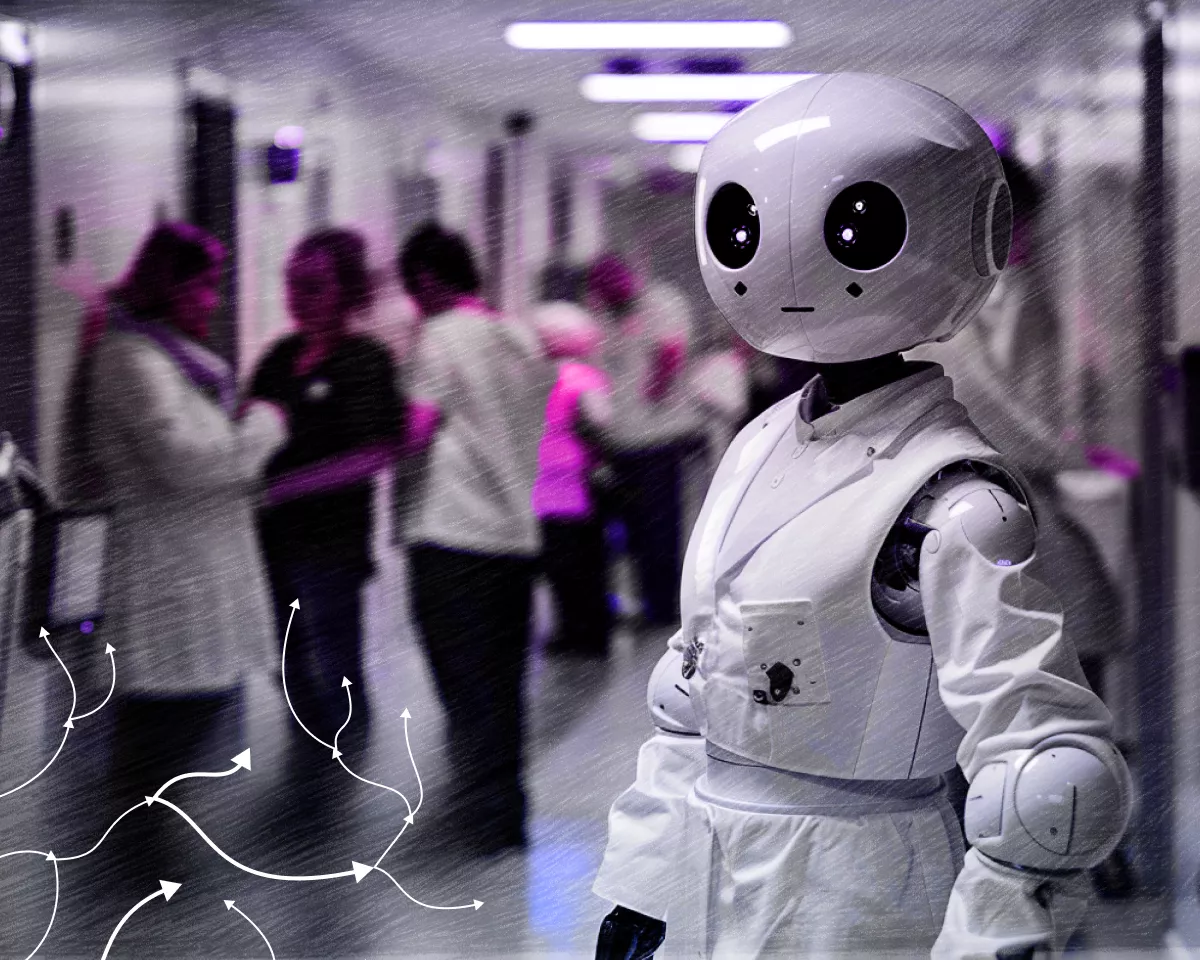
The pharmaceutical industry, which is actively integrating artificial intelligence into drug development processes, has encountered a systemic legal barrier. U.S. legislation is unwavering in its requirement: only humans can be named as inventors in patent applications. This creates a paradoxical situation where the key role of AI in creating molecules remains behind the scenes, while legal responsibility and recognition fall on the shoulders of researchers.
The case of Insilico Medicine is illustrative: its generative AI platform developed a potential compound for combating pulmonary fibrosis. In the filed application, the artificial intelligence is not mentioned at all—instead, five people are listed, including the CEO. This is not a coincidence but a forced measure dictated by case law.
The key turning point was the 2022 ruling of the Washington appellate court in the DABUS case. The court unequivocally held that the term "individual" in U.S. patent law refers exclusively to a human being. The AI that designed an improved food container in that case could not be recognized as an inventor. Since then, disputes have shifted to assessing human contribution: what matters is not the mere fact of using AI, but the sufficiency of human involvement in the process.
The legal community already anticipates a wave of challenges. Ryan Abbott, a partner at Brown, Neri, Smith & Khan, suggests that patents on AI-driven developments will begin to be mass-cancelled when errors in documentation are discovered. His position is categorical: "If I asked Claude to cure cancer, and it did, it would be inappropriate to claim that this is my achievement."
The situation is compounded by the regulator's inconsistency. The U.S. Patent and Trademark Office under the Trump administration took the position of treating AI as a "tool like a calculator" that does not require disclosure in an application. However, experts such as Sarah Korman from Isomorphic Labs insist that as the role of AI strengthens, existing law will inevitably have to be revised. For now, companies are forced to artificially keep humans in the development chain, documenting their participation in the synthesis and testing of molecules.
My analysis: The current legal vacuum is a ticking time bomb for the entire industry. Companies that downplay the role of AI risk losing patent protection in the future when legislation finally adapts to reality. It is far more forward-thinking now to lobby for the creation of clear criteria for "human contribution" and hybrid inventorship than to rely on legal loopholes that could collapse at any moment.