How to Quickly and Safely Withdraw Cryptocurrency: A Full Breakdown of Strategies and Pitfalls
Withdrawing cryptocurrency is one of the most critical stages of working with digital assets. An incorrectly chosen method can result in frozen funds, high commissions, or even complete loss of capital. In this article, we will examine the main strategies for withdrawing crypto, their advantages and disadvantages, and also highlight the key pitfalls that await beginners and experienced users alike.
Key Withdrawal Methods
There are several main ways to convert cryptocurrency into fiat money or withdraw it to bank cards. Each of them has its own characteristics, speed, and level of security.
- Cryptocurrency exchanges — the most popular method. The user sells crypto on the exchange and withdraws fiat to a bank card. The advantage is relatively low commissions and high speed. The disadvantage is the need to pass KYC verification and possible delays in processing applications.
- Cryptocurrency exchangers — specialized services that allow you to exchange crypto for fiat without registering on the exchange. They are convenient for small amounts, but often charge higher commissions and carry the risk of encountering fraudulent platforms.
- P2P platforms — direct exchange between users. The platform acts as a guarantor of the transaction. This method allows you to avoid exchange commissions, but requires careful verification of the counterparty and carries the risk of blocking funds due to the bank's anti-fraud system.
- Cryptocurrency cards — bank cards linked to a crypto wallet. They allow you to pay with cryptocurrency directly or withdraw cash from ATMs. The advantage is convenience, the disadvantage is high conversion commissions and limited support in some countries.
- Cryptocurrency ATMs — specialized devices for exchanging crypto for cash. They are rare and charge high commissions, but they provide anonymity.
How to Choose a Safe Withdrawal Method
Security should be the primary criterion when choosing a withdrawal method. Here are the key recommendations:
- Check the reputation of the service — read reviews on independent platforms, check the service's age and its license.
- Use two-factor authentication — always enable 2FA on exchange and wallet accounts.
- Verify the recipient's details — before sending funds, double-check the wallet address or card number.
- Avoid suspicious offers — if someone offers to exchange crypto at an inflated rate, it is likely a scam.
- Start with small amounts — before withdrawing a large sum, test the method with a small transaction.
Common Pitfalls and How to Avoid Them
Even experienced users can encounter problems when withdrawing cryptocurrency. Let's look at the most common pitfalls:
- Bank blocking — banks often block transactions related to cryptocurrency. To avoid this, use P2P platforms with bank transfers between individuals or choose banks that are loyal to crypto.
- High commissions — some methods charge up to 10-15% of the withdrawal amount. Compare rates across different services before choosing.
- Network congestion — during peak times, transaction fees on the Bitcoin or Ethereum network can increase significantly. Use networks with lower fees, such as TRC20 or BEP20.
- Scam exchangers — fake services that disappear with your funds. Always check the exchanger's rating on monitoring sites.
- Tax consequences — in many countries, cryptocurrency transactions are subject to taxation. Failure to declare income can lead to fines.
Step-by-Step Withdrawal Strategy
To minimize risks and speed up the withdrawal process, follow this algorithm:
- Choose a withdrawal method — based on the amount, urgency, and your jurisdiction.
- Check the limits — find out the minimum and maximum withdrawal amounts, as well as daily limits.
- Calculate commissions — consider the exchange commission, network fee, and bank commission.
- Test with a small amount — make a test transaction to verify the service works.
- Withdraw the main amount — after a successful test, proceed with the full withdrawal.
- Keep records — save all transaction confirmations for tax reporting.
Conclusion
Withdrawing cryptocurrency is a process that requires a careful approach and knowledge of the nuances. Choose proven methods, do not chase the most favorable rates, and always keep security in mind. Remember that the speed of withdrawal often depends on the chosen method and the current state of the blockchain network. By following the recommendations from this article, you can minimize risks and withdraw your funds quickly and safely.
Main channels and their specifics Today, there are three key ways to convert digital assets into fiat money: centralized exchanges (CEX), P2P platforms, and over-the-counter (OTC) services...
How to safely and quickly top up a crypto account: an overview of key methods
Sun refutes the scale of the block: Binance's restrictions on HTX only affect the EU and Britain.
 HTX founder Justin Sun has issued an urgent statement aimed at easing panic among the exchange's users. According to him, the restrictions imposed by Binance on HTX are targeted and affect exclusively clients from the United Kingdom and the European Union. Notably, in Binance's own official notice, which I have analyzed, there is no geographical reference—it is addressed to the entire global user base...
The digital ruble and cryptocurrency: Russia creates two isolated payment circuits
Russia opens the door for advertising crypto services: what will change for the market?
 Russian legislation is making a targeted but significant maneuver in the digital assets sphere. For the first time, the promotion of services by licensed cryptocurrency market participants is officially permitted, yet cryptocurrency itself as an investment object remains banned from advertising. This is a fundamentally new approach that requires detailed analysis.
What exactly is allowed, and what remains prohibited? The key distinction lies between advertising the digital currency itself and advertising services provided by regulated players...
The Central Bank limit of 300,000 rubles: how to legally increase the volume of cryptocurrency purchases
 The introduction by the Central Bank of an annual limit of 300,000 rubles on cryptocurrency purchases for non-qualified investors has raised many questions. However, upon a detailed analysis of the regulatory framework, it becomes obvious: this restriction does not apply to the total volume of an investor's transactions, but to each individual counterparty. This nuance opens up legal opportunities for distributing transactions among multiple banks, brokers, and exchanges...
Banking spreads on cryptocurrency in Russia: why the high margin is doomed to decline
 The Russian banking sector is preparing for a new stage — entering the cryptocurrency operations market. However, the first steps will come with high costs for clients. Contrary to expectations, initial spreads may turn out to be significantly higher than on classic crypto exchanges. But this situation is a temporary phenomenon, and the market will quickly put everything in its place.
Why spreads will be inflated at the start At the initial stage, banks will be forced to factor into the price not only the desired profit, but also a whole range of operational costs...
Largest theft from hardware wallets: Coldcard attack cost users $112 million
 A large-scale hacking campaign targeting Coldcard hardware wallets has resulted in losses of at least 1,778.84 BTC, equivalent to $112.7 million. My data analysis shows this is one of the most severe attacks on self-custody devices in the industry's history.
Attack Mechanics: An Error in Entropy Generation The attackers systematically recovered seed phrases generated by vulnerable devices starting July 30, 2026...
Ireland tightens the rules of the game: a new national strategy to combat money laundering in the crypto sphere
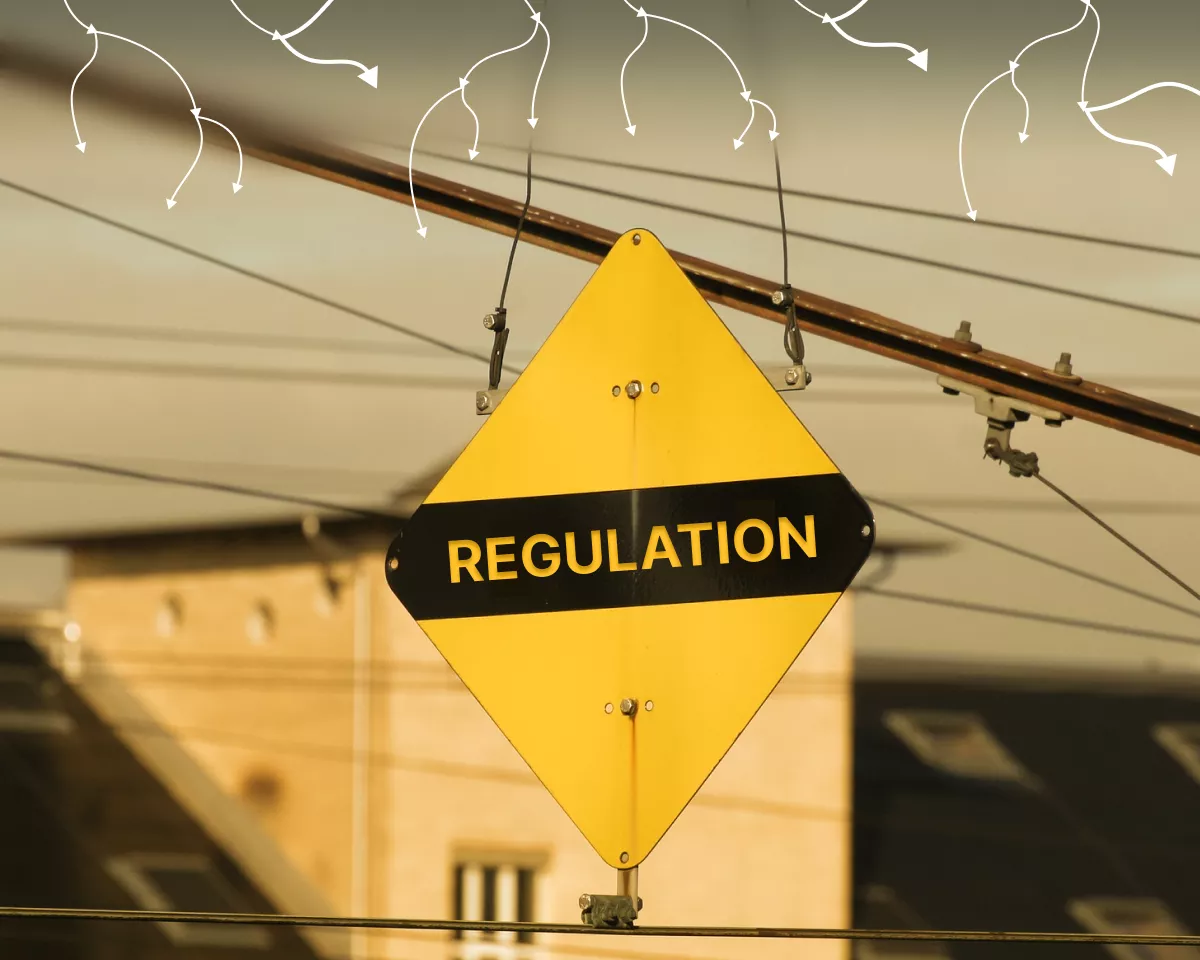 Ireland's Ministry of Finance has presented its first comprehensive document defining national policy on anti-money laundering (AML) and counter-terrorism financing (CFT) as applied to digital assets. This is not just a formal step, but a signal that the regulator intends to systematically close the most vulnerable areas of the crypto market.
The key focus is on transactions from private wallets...
Riot Platforms raises $573 million to build an AI campus in Texas: a bet on diversification
 Riot Platforms, one of the leading players in Bitcoin mining, is making a decisive move toward high-performance computing. The company has secured project debt financing of up to $573 million, which will be directed toward purchasing equipment and developing a 191 MW data center for artificial intelligence at its facility in Rockdale, Texas. This is not just another investment—it is a strategic maneuver that could redefine the company's business model amid growing competition for energy resources...
Galaxy Digital lowers its forecast for the CLARITY Act: chances of passage drop to 10%
 Galaxy Digital analysts have revised their expectations regarding the fate of the CLARITY Act in the U.S. Senate, lowering the probability of its approval in 2026 to 10%. This is a significant drop compared to previous estimates, reflecting the growing complexity of the political situation surrounding cryptoasset regulation.
Key obstacles remain unresolved disputes over ethical standards for government officials, as well as provisions concerning stablecoin yields...
Wall Street's closed blockchains — a "race to the bottom": Etherealize CEO raises the alarm
 Recently, a dangerous trend has been observed on Wall Street: major financial institutions are increasingly turning to closed blockchains with restricted access. However, in my deep conviction, this is a dead-end path that leads the industry back to isolated systems, against which it was originally created.
Vivek Raman, co-founder and CEO of Etherealize, a company advocating for Ethereum adoption in traditional finance, gave a sharp assessment of this trend...
Withdrawing funds from crypto exchanges: a strategy for security and liquidity management
When we talk about withdrawals, it is important to distinguish between two key scenarios: withdrawing fiat money and withdrawing digital assets...
How to Safely and Quickly Top Up Your Crypto Exchange Balance: A Complete Analyst's Guide
Topping up your balance on a crypto exchange is one of the most common operations for traders and investors. However, despite its apparent simplicity, many users make mistakes that lead to loss of funds or unnecessary fees. In this guide, I will walk through the key methods, their advantages and disadvantages, and share practical tips for ensuring security and speed.
Main Methods for Topping Up a Balance
There are several main ways to deposit funds into a crypto exchange account. Each of them has its own characteristics, which are important to consider depending on your goals and region.
- Bank card transfer (fiat) — the most popular method for beginners. It allows you to deposit funds in dollars, euros, or other national currencies directly from a Visa or Mastercard.
- Cryptocurrency transfer — sending coins from an external wallet or another exchange. This method is preferred by experienced users due to lower fees and higher speed.
- P2P platforms — buying crypto directly from other users. This method often offers the best exchange rate and does not require bank verification.
- Bank transfer (SEPA, SWIFT) — suitable for large amounts, but may take several business days.
Step-by-Step Instructions for Topping Up via Bank Card
If you are using a card for the first time, follow this algorithm to avoid common mistakes.
- Log in to your exchange account and go to the "Deposit" or "Top Up" section.
- Select the fiat currency and the "Bank Card" method.
- Enter the deposit amount and confirm the operation.
- You will be redirected to a secure payment page where you need to enter your card details.
- After the transaction is completed, the funds will be credited to your balance within a few minutes.
Important: always check the minimum and maximum deposit limits, as well as the commission, which can vary depending on the currency and region.
How to Top Up with Cryptocurrency
Topping up with cryptocurrency is considered the fastest and most reliable method, especially for large amounts. Here is how to do it correctly.
- In the "Deposit" section, select the cryptocurrency you want to send (for example, BTC or USDT).
- Copy the deposit address or scan the QR code. Be careful: each coin has its own network (ERC-20, TRC-20, BEP-20), and sending to the wrong address may result in loss of funds.
- Initiate the transfer from your external wallet or another exchange.
- Wait for network confirmations. The time depends on the chosen blockchain and network load.
Tip: for small amounts, use networks with low fees, such as TRC-20 for USDT, to save on commissions.
Security Tips
Security should always come first, especially when it comes to money. Here are the key recommendations from analysts.
- Enable two-factor authentication (2FA) — this will protect your account even if your password is compromised.
- Check the deposit address before each transaction. Hackers often use clipboard malware to replace addresses.
- Use only verified exchanges with a good reputation and insurance funds.
- Do not share your private keys or seed phrases with anyone, including support staff.
Common Mistakes and How to Avoid Them
Even experienced users sometimes make mistakes. Let's look at the most common ones.
- Sending coins on the wrong network — always double-check the network type before sending.
- Ignoring fees — some methods have hidden fees that can significantly reduce the deposit amount.
- Using unverified platforms — this can lead to account blocking or loss of funds.
- Depositing without checking limits — some exchanges have minimum deposit amounts that may be higher than expected.
Conclusion
Topping up your crypto exchange balance is a process that requires attention and a responsible approach. Choose the method that suits your goals, always check the details, and do not neglect security measures. By following the recommendations from this guide, you can deposit funds quickly, safely, and without unnecessary costs.
If you have any questions or want to share your experience, leave a comment below. I will be happy to answer and help you figure out the details.
Main Ways to Deposit Funds Modern platforms offer several channels for funding your account...
Sun refutes the scale of the block: Binance's restrictions for HTX will only affect the EU and Britain?
 HTX founder Justin Sun rushed to reassure users, stating that the restrictions imposed by Binance on his exchange are targeted and apply exclusively to clients from the United Kingdom and the European Union. However, Binance's official notice lacks any geographical reference, which raises legitimate questions.
This statement came on Friday evening, just a few hours after Binance announced blacklisting HTX...
Russia's cryptocurrency strategy: two circuits instead of one — what will change for the market
 The average cost of sending $200 abroad is 6.4% of the amount, while a bank transfer would cost nearly 15%. At the same time, the payment message itself reaches the recipient bank within ten minutes. This is a striking illustration of where the main costs and time delays are concentrated in the modern financial system.
All the remaining time and virtually all the money go toward what happens after the message is delivered...
Russia opens the door for advertising crypto services: what has actually changed
The Russian digital asset market is undergoing a landmark, albeit extremely cautious, shift. New legislation for the first time permits advertising of services by licensed crypto market participants, yet direct marketing of the digital coins themselves remains prohibited. This is a fine line that all industry players must clearly understand.Where the line of what is permitted lies The key principle of the new regulation is the distinction between promoting an asset and promoting a service...
The Central Bank's limit of 300,000 rubles: a legal way to bypass the restriction for large investors
The central bank has set an annual threshold of 300,000 rubles for purchasing cryptocurrency for non-qualified investors. However, as my analysis of the regulatory framework shows, this restriction does not apply to the client's total transaction volume, but rather to each individual counterparty. In other words, an investor with substantial capital can legally distribute their transactions among several banks, brokers, and exchangers while remaining within the law...Competition will bring down bank spreads on cryptocurrency in Russia: market forecast
The launch of cryptocurrency banking operations in Russia will begin with high spreads that will significantly exceed those of classic crypto exchanges. However, it is unlikely that market participants will be able to maintain a markup of 5–7% or higher amid competitive pressure. This is my analysis of the current situation, based on an assessment of market mechanisms and player behavior.The key factor determining the price for the client is not the bank's pursuit of excess profits, but a combination of costs: the cost of liquidity, the client's willingness to pay for a regulated framework, and the difference compared to familiar fiat transfer channels...
Largest theft from hardware wallets: Coldcard attack cost BTC holders $112 million
A large-scale incident that shook the self-custody community resulted in the loss of at least 1,778.84 BTC — approximately $112.7 million at the current exchange rate. This involves a systematic attack on Coldcard hardware wallets that affected thousands of users worldwide.Root of the problem: an error in entropy generation The attack began on July 30, 2026, when attackers started systematically recovering seed phrases generated by vulnerable devices...
Ireland tightens crypto regulation: new strategy to combat money laundering
Ireland's Ministry of Finance has unveiled its first comprehensive national strategy aimed at combating money laundering (AML) and terrorist financing (CFT) in the cryptocurrency sector. This move marks a systematic approach by the regulator to integrate digital assets into the country's legal framework.A key element of the document is the tightening of control over transactions using private (non-custodial) wallets...
Riot Platforms raises $573 million to build an AI campus in Texas: a bet on high-performance computing
Major American miner Riot Platforms has signed an agreement for project debt financing of up to $573 million. The funds will be used to purchase equipment and develop a 191 MW data center for artificial intelligence located at the company's facility in Rockdale, Texas. This step clearly demonstrates the industry's strategic shift toward diversification beyond cryptocurrency mining.The credit pool is led by Morgan Stanley, which serves as the administrative agent for the group of lenders...
Galaxy Digital has lowered its forecast for the CLARITY Act: the chances of passage in 2026 are estimated at 10%.
Analysts at Galaxy Digital have revised their expectations regarding the fate of the CLARITY Act in the U.S. Senate, lowering the probability of its approval in 2026 to 10%. This is a significant drop compared to previous estimates, reflecting the growing complexity of the political landscape surrounding cryptoasset regulation.Key obstacles remain unresolved issues related to ethical standards for government officials and controversial provisions on stablecoin yields...
Wall Street's closed blockchains — a "race to the bottom": Etherealize CEO accuses consortia of fragmenting liquidity
In recent months, Wall Street has once again turned its attention to private blockchain networks, but this trend is drawing serious criticism from leading industry players. Vivek Raman, co-founder and CEO of Etherealize, in a recent interview called the growing popularity of consortium networks with restricted access a "race to the bottom" that undermines the fundamental principles of distributed ledger technology...Withdrawal: Key Aspects of Liquidity Management in Cryptocurrency Operations
First and foremost, it is necessary to distinguish between types of withdrawals: fiat transfers to bank cards, stablecoin transactions, and transfers in native blockchain tokens...
How to Properly Top Up a Crypto Account: Expert Analysis of Key Methods and Risks
Topping up a crypto account is the first step for any user entering the world of digital assets. However, despite the apparent simplicity, this process has many nuances: from choosing a method to security issues. In this article, we will examine the main ways to fund a crypto account, their advantages and disadvantages, and also provide recommendations for minimizing risks.
Key Methods for Topping Up a Crypto Account
There are several main ways to fund a crypto account, each with its own characteristics:
- Bank card transfer — the most common method. It is suitable for beginners due to its simplicity and speed. However, it is important to consider that many banks may block transactions with crypto exchanges, and commissions can be significant.
- Bank transfer — suitable for large amounts. This method is characterized by lower commissions but takes more time (from several hours to several days).
- Cryptocurrency transfer from another wallet — the optimal option for those who already own digital assets. It is important to carefully check the network and address to avoid losing funds.
- P2P platforms — allow you to buy cryptocurrency directly from other users. This method offers flexible terms and often lower commissions, but requires caution when choosing a counterparty.
- Electronic payment systems — such as PayPal, Skrill, or WebMoney. Some exchanges support these methods, but their availability may be limited depending on the region.
Risks and How to Minimize Them
When topping up a crypto account, users may encounter the following risks:
- Blocking of transactions by banks — many financial institutions treat crypto operations with suspicion. To avoid this, it is recommended to use exchanges with a good reputation and notify the bank in advance about the transaction.
- Fraud on P2P platforms — always check the counterparty's rating, use the platform's escrow service, and avoid suspicious offers.
- Errors when entering the address — a single mistake can lead to the irretrievable loss of funds. Always double-check the address and use QR codes where possible.
- High commissions — some methods may involve significant fees. Compare conditions on different platforms before making a transaction.
- Security of personal data — use two-factor authentication (2FA) and never share your private keys or passwords with third parties.
Recommendations from Experts
To make topping up your crypto account as safe and profitable as possible, follow these tips:
- Choose reliable and regulated exchanges with a positive reputation.
- Start with small amounts to test the method before making large transactions.
- Keep records of all transactions and store confirmations.
- Use cold wallets for storing significant amounts of cryptocurrency.
- Stay updated on changes in legislation in your country regarding cryptocurrencies.
Topping up a crypto account is a process that requires attention and a responsible approach. By choosing the right method and following security measures, you can minimize risks and make your experience in the world of cryptocurrencies comfortable and safe.
Main ways to deposit funds The most common method is a direct transfer from an external wallet (for example, MetaMask, Ledger, or an exchange address)...
Sun refutes the global nature of Binance's restrictions on HTX: analysis of the statement and real risks
HTX founder Justin Sun was quick to provide public clarifications regarding his exchange being added to Binance's "blacklist." In his statement made on Friday evening, just hours after the official notice from the competitor, Sun emphasized that the restrictions are narrowly targeted and affect exclusively users from the United Kingdom and the European Union.According to him, he has already held talks with Binance representatives, who confirmed that the block is not global...
Digital ruble and crypto: Russia is building two parallel financial realities
While the world debates the future of money, Russia has already made its move. This is not just about a new law, but about the formation of two isolated payment circuits: a public one for domestic settlements, and a private one for foreign trade operations. This is a fundamentally different approach from the US or Europe, and it deserves close attention from any market participant.The key point is not the speed of message transmission...
Crypto Advertising in Russia: A New Era of Regulated Marketing or a Targeted Relaxation?
Russian legislation is making a landmark but extremely cautious maneuver toward the digital assets industry. For the first time in a long while, advertising of cryptocurrency services is becoming legal, but only for a narrow circle of licensed players and with a host of caveats. This is not a "green light" for the entire industry, but rather a door cracked open for those willing to play by the establishment's rules...The Central Bank's limit of 300,000 rubles: how a large investor can legally bypass the restriction
The annual limit of 300,000 rubles on cryptocurrency purchases for non-qualified investors is not a verdict, but rather a formality that can be bypassed completely legally. The key nuance that many overlook is that the restriction is set for each counterparty separately, not cumulatively. This means that an investor with significant capital can distribute their transactions among several banks, brokers, and exchangers without violating any regulatory norms...