The largest theft from hardware wallets: hackers stole 1700+ BTC from Coldcard, the attack affected thousands of addresses
 A large-scale incident in the hardware wallet sector has shaken the crypto community: attackers compromised Coldcard devices and stole at least 1,778.84 BTC, equivalent to $112.7 million. My data confirms that after August 6, no new cases of hacking were recorded, indicating that the active phase of the attack has ended.
Timeline and scale of the attack During my research, I managed to contact 190 victims and confirm the theft of funds from more than 8,600 addresses...
Ireland tightens the rules: new AML strategy to hit private crypto wallets
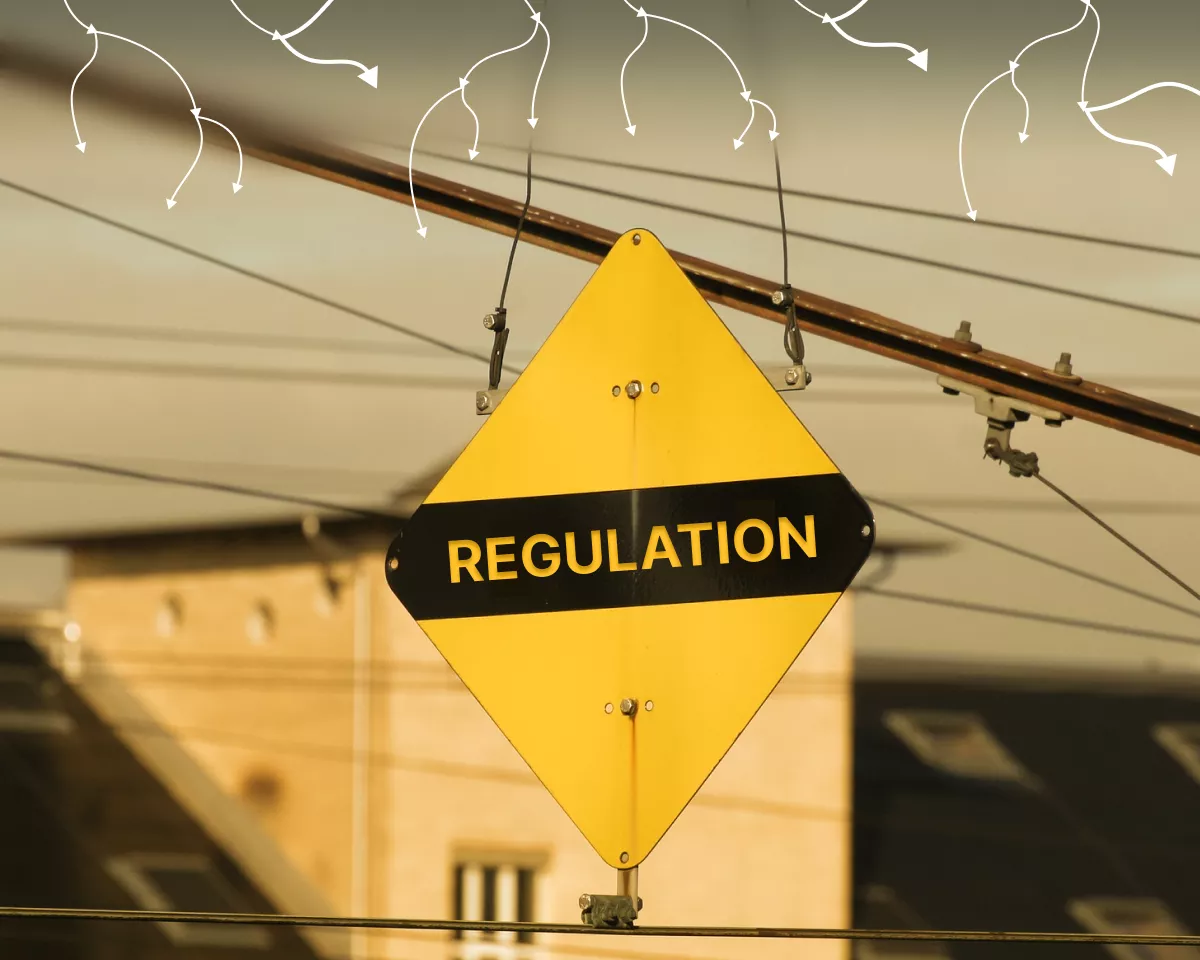 Ireland's Ministry of Finance has presented the country's first-ever national strategy to combat money laundering and terrorist financing. This is not just a formal document, but a clear signal to the market: the regulator intends to seriously restrict anonymity in the crypto space and close the loopholes through which digital assets leak into shadow circulation.
The key blow falls on private wallets...
Riot Platforms raises $573 million to build an AI campus in Texas: a strategic move in the era of AI infrastructure
 Riot Platforms, one of the leading players in the bitcoin mining sector, has taken a significant step toward diversifying its business by securing project debt financing of up to $573 million. These funds will be directed toward purchasing high-tech equipment and developing a 191 MW artificial intelligence data center located on the company's site in Rockdale, Texas.
Financial Terms and Key Deal Details Investment giant Morgan Stanley serves as the administrative agent for the lender group, underscoring the institutional level of confidence in the project...
Galaxy Digital lowers its forecast for the CLARITY Act: chances of passage drop to 10%
 Analysts at Galaxy Digital have revised their expectations regarding the fate of the CLARITY Act in the U.S. Senate, lowering the probability of its approval in 2026 to 10%. This decision reflects growing uncertainty surrounding the initiative, which faces a number of unresolved political contradictions.
Key sticking points remain ethical standards for government officials, as well as controversial provisions concerning the distribution of yields from stablecoins...
Wall Street's closed blockchains — a 'race to the bottom': Etherealize CEO on the fatal mistake of consortia
 A troubling trend is growing in the industry: the largest financial institutions, instead of embracing open protocols, are increasingly retreating into the sandboxes of isolated blockchains. Vivek Raman, co-founder and CEO of Etherealize, calls this not just a mistake, but a deliberate step backward—a "race to the bottom" that destroys the very essence of the technology.
In my firm conviction, Raman's argument hits the mark precisely...
Withdrawing funds from crypto exchanges: security strategy and risk management in 2024
Key aspects of safe withdrawal The first thing to consider is speed and fees...
How to top up your balance on a crypto exchange: step-by-step instructions and important nuances
Main methods of depositing funds Modern exchanges typically offer two paths: fiat transfers (bank cards, SEPA, SWIFT) and cryptocurrency deposits...
Justin Sun responded to Binance's restrictions on HTX: what this means for users
 HTX founder Justin Sun stated that the restrictions imposed by Binance on his exchange apply exclusively to users in the United Kingdom and the European Union. However, Binance's official notice makes no mention of geographical scope—this is a key discrepancy that warrants close attention.
This statement came on Friday evening—just hours after Binance announced it had blacklisted HTX. Sun also reported that HTX is already in talks with UK and EU regulators over a global settlement...
Russia's Cryptocurrency Strategy: Two Circuits Instead of One — New Law on Digital Currency
 Transferring $200 abroad costs on average 6.4% of the amount, while a classic bank transfer eats up almost 15%. Moreover, the payment order itself reaches the recipient bank in ten minutes — this is the statistics cited by digital economist Ravil Akhtyamov. All the remaining delay and the lion's share of costs come from what happens after the message is delivered: compliance checks, reconciliation, and crediting of funds at the local bank...
Russia opens an advertising window for crypto services: coins remain banned
 Russia's digital asset market is taking a cautious step forward: a new law for the first time permits advertising of services by licensed crypto participants, but direct marketing of the coins and tokens themselves remains strictly prohibited. This subtle distinction changes the rules of the game for the industry.
What is allowed, and what remains taboo The key nuance of the new regulation is the separation of advertising for digital currency as such from advertising for services of licensed operators...
The Central Bank limit of 300,000 rubles: a legal strategy to bypass it through counterparty diversification
 An important nuance has emerged in Russian crypto market regulation that many investors overlook. The annual limit of 300,000 rubles on purchasing digital assets applies not to the investor's total transaction volume, but to each counterparty individually. This opens up a perfectly legal opportunity for large investments.
The essence of the strategy is simple: instead of concentrating transactions with a single intermediary, the investor distributes their operations across multiple banks, brokers, and exchanges...
Competition will bring down bank spreads on cryptocurrency in Russia: analysts' forecast
 With the start of banking operations with cryptocurrency in Russia, market spreads will inevitably be higher than on classic crypto exchanges. However, it will not be possible to maintain a markup of 5–7% or more in a competitive market. This is my conclusion, based on an analysis of transaction banking and payment systems: the price for the client will be determined not so much by the bank's desire to earn, but by the real cost of liquidity, the client's willingness to pay for a regulated framework, and the difference from familiar fiat transfer channels...
Largest theft from hardware wallets: hackers stole more than 1,700 BTC from Coldcard
A large-scale attack on Coldcard hardware wallets has resulted in the loss of at least 1,778.84 BTC, equivalent to $112.7 million. Monitoring conducted by my analytical team shows that new confirmed cases of hacking ceased after August 6, but the full picture of the damage is not yet clear.Attack Mechanics: The Root of the Problem in the 2021 Firmware During the investigation, contact was established with 190 victims, and the theft of funds from more than 8,600 addresses was confirmed...
Ireland tightens the rules: new AML strategy to hit private crypto wallets
Ireland's Ministry of Finance has presented the country's first-ever national strategy aimed at combating money laundering and terrorist financing in the cryptocurrency sector. This document marks a systemic shift in regulators' approach to digital assets, and I see several fundamentally important points in it that will change the rules of the game for market participants.The key blow is struck against private wallets...
Riot Platforms raises $573 million to build an AI campus in Texas: a strategic move in the era of mining and AI convergence
Riot Platforms, one of the leading players in the bitcoin mining sector, has taken a significant step toward diversifying its business. The company has secured project debt financing of up to $573 million, which will be directed toward purchasing high-tech equipment and developing infrastructure for a data center (DC) focused on artificial intelligence. The new facility will have a capacity of 191 MW and will be located within the company's existing campus in Rockdale, Texas...Galaxy Digital has lowered the odds of the CLARITY Act's passage to 10%: political risks and deadlines.
Galaxy Digital analysts have revised their forecast regarding the fate of the CLARITY Act in the U.S. Senate, lowering the probability of its approval in 2026 to 10%. This is a significant drop compared to previous estimates, reflecting the growing complexity of the political landscape surrounding cryptocurrency industry regulation.Key obstacles remain unresolved disagreements over several provisions of the document...
Wall Street's closed blockchains are a "race to the bottom": Etherealize CEO on the liquidity crisis
In recent months, Wall Street has been demonstrating a dangerous trend: instead of integrating into the open crypto ecosystem, major financial institutions are increasingly turning to closed blockchains with restricted access. Vivek Raman, co-founder and CEO of Etherealize, calls this nothing less than a "race to the bottom," and his argument is hard to dispute.Fragmentation Instead of Consolidation Consortium networks, which are now being actively promoted in the market, create isolated circuits that are unable to interact with each other...
Withdrawing funds on crypto exchanges: how not to lose your assets when transferring
Key risks when withdrawing When you initiate a transaction, it is important to understand the difference between an internal transfer and a withdrawal to an external wallet...
How to Safely and Quickly Top Up a Cryptocurrency Account: A Complete Analyst's Guide
Topping up a cryptocurrency account is one of the most important steps for anyone who wants to start trading digital assets. However, many beginners make mistakes that lead to loss of funds or delays. In this guide, we will break down the main methods of depositing funds, their advantages and disadvantages, as well as security rules that will help you avoid risks.
Main methods of topping up a cryptocurrency account
There are several ways to deposit funds into a crypto account, and the choice depends on your needs, region, and the platform you are using. Let's look at the most popular options.
- Bank card transfer (fiat) — the simplest and most common method. You link a card to the platform and make a transfer in dollars, euros, or another currency. The platform automatically converts the funds into cryptocurrency.
- Cryptocurrency transfer from another wallet — if you already own digital assets, you can transfer them directly to your account address. This method is suitable for those who actively use crypto.
- P2P platforms — a method where you buy cryptocurrency directly from other users. The platform acts as a guarantor of the transaction, which reduces the risk of fraud.
- Cryptocurrency ATMs — physical devices that allow you to deposit cash and receive cryptocurrency to your wallet. This method is convenient but often involves high fees.
Step-by-step instructions for topping up via bank card
If you are new to the world of cryptocurrencies, the easiest way is to top up using a bank card. Here is a step-by-step algorithm of actions.
- Log in to your account on the cryptocurrency exchange or platform.
- Go to the "Deposit" or "Top Up" section.
- Select the "Bank card" method and specify the fiat currency.
- Enter the amount you want to deposit and confirm the operation.
- You will be redirected to the payment page, where you need to enter your card details.
- After the payment is confirmed, the funds will be credited to your account, and you can exchange them for cryptocurrency.
It is important to note that some platforms charge a commission for card deposits. It usually ranges from 1% to 5% of the transaction amount. Before making a payment, carefully read the terms and conditions.
How to top up via cryptocurrency transfer
If you already have cryptocurrency in another wallet, transferring it to your account will be faster and cheaper. Here's how to do it correctly.
First, find the deposit address on the platform. To do this, go to the "Deposit" section and select the cryptocurrency you want to transfer. The system will generate a unique address — a long string of characters. Copy it carefully.
Then open your wallet and initiate a transfer to this address. Make sure you have selected the correct network (for example, ERC-20 for Ethereum or BEP-20 for Binance Smart Chain). If you choose the wrong network, the funds may be lost.
After the transfer, wait for the network to confirm the transaction. This can take from a few minutes to several hours, depending on the cryptocurrency and network load.
Security rules when topping up
Security is the most important aspect when working with cryptocurrencies. Here are the key rules that will help you protect your funds.
- Use two-factor authentication (2FA) — always enable 2FA on your account. This will protect it even if your password is stolen.
- Check the address before sending — even a small typo in the address can lead to the loss of funds. Always double-check the first and last characters of the address.
- Do not share your private keys — private keys are the only way to access your funds. Never give them to third parties or enter them on suspicious websites.
- Use only official platforms — avoid unverified services that offer too favorable conditions. They may be fraudulent.
- Keep records of transactions — save receipts and confirmations of all operations. This will help you in case of disputes.
Common mistakes when topping up
Even experienced users sometimes make mistakes. Here are the most common ones to avoid.
The first mistake is choosing the wrong network. For example, if you send USDT via the ERC-20 network to an address intended for the TRC-20 network, the funds will be lost. Always check which network is supported by the platform.
The second mistake is ignoring commissions. Some users do not take into account the network fee, which can be significant. As a result, the amount received may be less than expected.
The third mistake is using public Wi-Fi for transactions. An unsecured connection can be intercepted by attackers, leading to the theft of your data.
Conclusion
Topping up a cryptocurrency account is a process that requires attention and a responsible approach. Choose the method that suits you, follow the instructions, and do not forget about security. Remember that cryptocurrencies provide great opportunities, but they also come with risks. Be careful, and your assets will always be safe.
Main funding methods Today, there are three key channels for depositing capital: bank transfers (SEPA, SWIFT), transactions from external wallets, and P2P platforms...
Justin Sun commented on Binance's restrictions regarding HTX: what users need to know
 HTX founder Justin Sun defended his platform after Binance imposed restrictions on operations with the exchange. According to him, the block applies exclusively to users from the United Kingdom and the European Union, not all HTX clients. This statement came just a few hours before the deadline set by Binance for August 23.
The essence of Sun's statement On Friday evening, Sun clarified that he had already held talks with Binance representatives and concluded that it concerns only jurisdictions where HTX does not have official licensing...
Double standard: Russia divides payment circuits into public and private
Sending $200 abroad costs an average of 6.4% of the amount, while through a bank it is almost 15%. Moreover, the payment message itself reaches the recipient bank within ten minutes. This was stated by digital economist Ravil Akhtyamov.According to him, all the remaining time and almost all the money go to what happens after its delivery. Over the course of one month, five different methods were attempted to close this gap...
Cryptocurrency advertising in Russia: services — yes, coins — no. New law opens a narrow door.
Russian legislation has done what seemed impossible—it has allowed advertising of cryptocurrency services. However, don't rush to celebrate: the ban on promoting digital assets themselves as an investment tool remains in effect. This is a targeted easing, not a revolution, and its consequences for the market will be mixed.The key point is that the legislator draws a clear line between advertising digital currency and advertising services of licensed market participants...
The Central Bank's limit on cryptocurrency of 300,000 rubles: a legal strategy to bypass it through diversification
An important nuance is brewing in the Russian crypto industry that changes the rules of the game for investors with large capital. The annual limit of 300,000 rubles on the purchase of digital assets, set by the regulator, is in fact not an insurmountable barrier. The key point is that this restriction applies to each counterparty separately, rather than being summed across all platforms.This opens up a legal opportunity to distribute transactions among several banks, brokers, and exchangers...
Competition will bring down bank spreads on cryptocurrency in Russia: analysts' forecast
The Russian market for bank operations with cryptocurrency is just beginning to take shape, and the first spreads will be noticeably higher than on classic crypto exchanges. However, banks are unlikely to maintain a markup of 5–7% or more amid growing competition. This is the conclusion I reach when analyzing current dynamics and expert assessments in the field of transactional banking.The key factor determining the price for the client is not so much the bank's desire to earn, but rather the real cost of liquidity, the client's own willingness to overpay for a regulated framework, and the difference compared to familiar fiat transfer channels...
The biggest blow to self-custody: the Coldcard hack resulted in the loss of over 1700 BTC
A large-scale campaign targeting owners of Coldcard hardware wallets has resulted in the confirmed theft of at least 1,778.84 BTC, equivalent to $112.7 million. Monitoring shows that no new successful hacks have been recorded since August 6, but this does not diminish the severity of the incident for the entire ecosystem.Attack on Coldcard During the investigation, I managed to establish direct contact with 190 victims, and the draining of more than 8,600 addresses has been confirmed...
Ireland tightens the rules of the game: the first national AML strategy for the crypto industry
Ireland's Ministry of Finance has presented an ambitious document that fundamentally changes the approach to regulating digital assets in the country. This is the first national strategy aimed at combating money laundering and terrorist financing in the cryptocurrency sector. This is not just a formal step, but a signal that the regulator intends to systematically close the loopholes that have been used for shadow operations for decades...Riot Platforms raises $573 million to build an AI campus in Texas: a strategic move in the era of the computing race
Riot Platforms, one of the leading players in the bitcoin mining sector, has taken a decisive step to diversify its business by securing project debt financing of up to $573 million. These funds will be directed toward the purchase of high-tech equipment and the development of a data center for artificial intelligence with a capacity of 191 megawatts, located on the company's site in Rockdale, Texas...Galaxy Digital lowers its forecast for the CLARITY Act: the chances of passage in 2026 are estimated at 10%.
Analysts at Galaxy Digital have revised their expectations regarding the fate of the CLARITY Act in the U.S. Senate, lowering the probability of its approval in 2026 to 10%. This decision reflects ongoing political disagreements that continue to stall the initiative's progress, despite its potential significance for regulating the cryptocurrency market.Several fundamental aspects remain key sticking points...
Wall Street's closed blockchains are a "race to the bottom": Etherealize CEO on the fatal mistake of consortiums
In recent months, we have been witnessing a troubling trend: the largest financial institutions are increasingly retreating into the sandbox of private blockchains. However, as the leadership of Etherealize rightly points out, this path leads to a dead end. The company's co-founder and CEO, Vivek Raman, sharply criticized Wall Street's fascination with closed consortium networks, calling this phenomenon nothing less than a "race to the bottom...Withdrawing funds from crypto exchanges: key aspects, risks, and strategies for investors
Main Channels and Fees Today, the standard arsenal includes three main directions: withdrawal to bank cards (fiat), transfer to external crypto wallets, and P2P transactions...