Key aspects of funding a cryptocurrency account: strategies and risks
Why the speed and reliability of deposits matter In the volatile digital asset market, capital downtime is missed profit...
San refutes the global nature of the Binance block: restrictions for HTX apply only to the EU and Britain.
 HTX founder Justin Sun made an emergency statement aimed at calming panic among exchange users after Binance blacklisted HTX. According to him, the restrictions are not global but strictly regional, affecting only clients from the UK and the European Union.
This statement came just hours after Binance notified about blocking operations with a number of platforms. Notably, Binance's notification itself made no mention of geographic targeting—it was addressed to all users without exception, which sparked a wave of speculation about a full-scale breakdown in relations...
Double Circuit: How Russia's New Law Divided the Crypto World into "Inside" and "Outside"
 Sending $200 abroad today costs on average 6.4% of the amount, while through a bank it is almost 15%. Moreover, the payment message itself reaches the recipient bank within ten minutes. I cite these figures not by chance: they expose the main problem of the modern financial system — the "last mile," which eats up time and money.
This is not about data transmission speed, but about post-processing: compliance checks, reconciliations, and crediting at the local bank...
Russia opens an advertising window for crypto services: what has actually changed
A Fine Line: What Is Allowed and What Is Not The key innovation is a clear distinction between advertising digital currency and advertising services provided by regulated players...
The Central Bank limit of 300,000 rubles: a legal strategy for large investors
 The annual threshold of 300,000 rubles for purchasing cryptocurrency, set by the Central Bank, operates not as an aggregate limit but on a per-counterparty basis. This opens up a legal opportunity for high-net-worth investors to diversify transactions across multiple banks, brokers, and exchange services.
For most non-qualified investors, the established amount is sufficient for basic operations...
Competition will bring down bank spreads on cryptocurrency in Russia
 With the launch of cryptocurrency banking operations in Russia, spreads will initially be noticeably higher than on classic crypto exchanges. However, banks are unlikely to maintain a markup of 5–7% or more amid competitive pressure. This is my analysis of the current situation, based on an in-depth study of market mechanisms and expert assessments in the field of transactional banking.
The key factor determining the price for the client is not the bank's desire to profit, but the cost of liquidity and the client's own willingness to pay for a regulated framework...
The largest theft in the history of hardware wallets: the Coldcard hack cost users $112 million
 A large-scale attack on Coldcard hardware wallets has led to losses already estimated at 1,778.84 BTC — over $112 million at the current exchange rate. This is one of the most serious incidents in the self-custody of crypto assets in recent years. It is important to emphasize: new confirmed cases of hacking ceased after August 6, which provides grounds for cautious optimism.
Anatomy of the Attack: A 2021 Firmware Error My analysis shows that the root of the problem lies in a software bug introduced by Coinkite back in 2021...
Ireland tightens crypto regulation: new strategy against money laundering
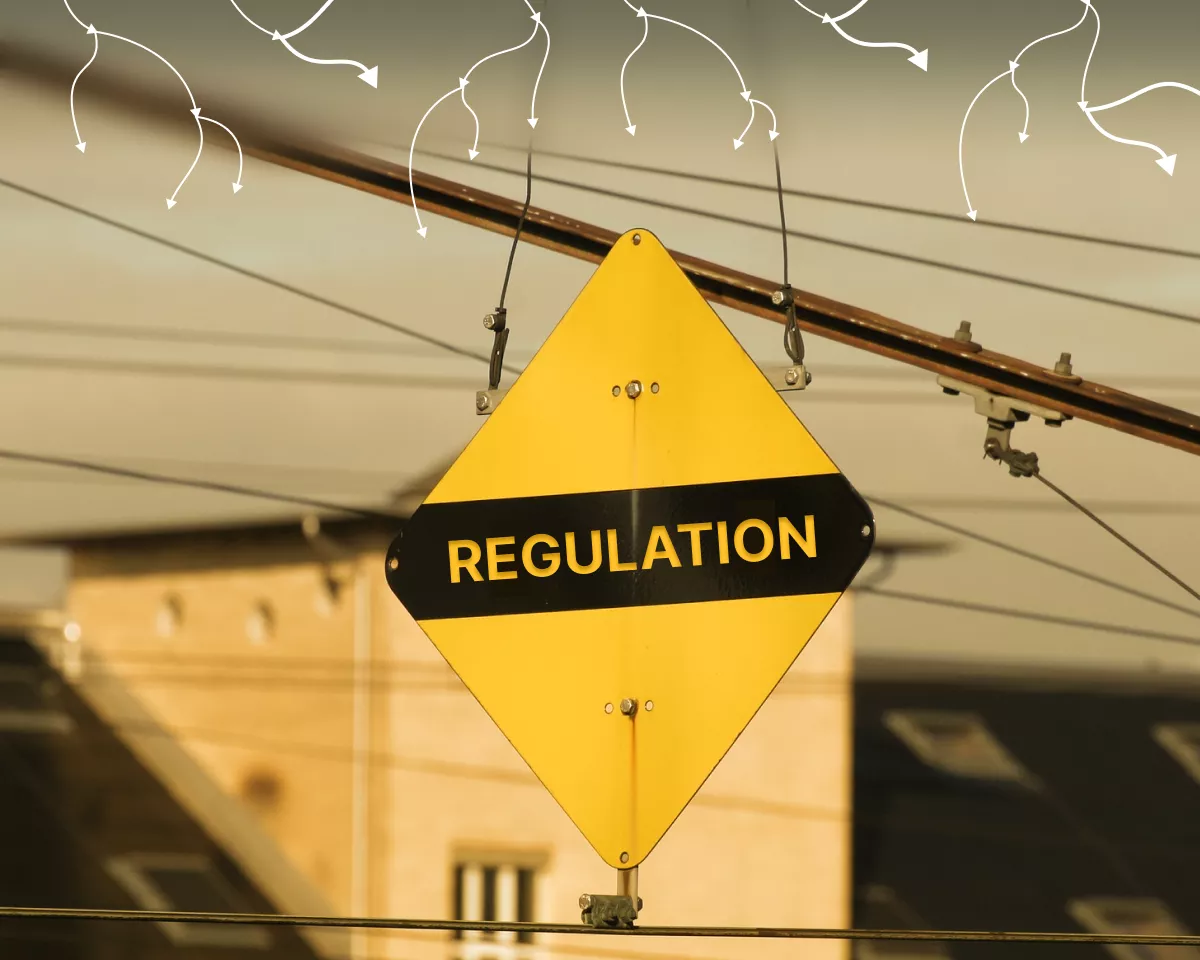 Ireland's Ministry of Finance has presented its first national strategy to combat money laundering and terrorist financing (AML/CFT), which directly impacts the cryptocurrency sector. This move marks a systematic approach to regulating digital assets in the country, and I see it as a clear signal for the entire market: the era of anonymous self-regulation in EU jurisdictions is coming to an end.
Key measures for the crypto industry The document introduces enhanced checks for transfers from private (non-custodial) wallets...
Riot Platforms raises $573 million to build an AI campus in Texas: a bet on diversification
 Riot Platforms, one of the leading players in the bitcoin mining sector, has taken a decisive step toward high-performance computing. The company has closed a deal to secure project debt financing of up to $573 million. The funds will be used to purchase equipment and develop a 191 MW artificial intelligence data center located on its campus in Rockdale, Texas.
Morgan Stanley serves as the administrative agent for the lender group, indicating an institutional level of confidence in the company's strategy...
Galaxy Digital has sharply lowered its forecast for the CLARITY Act: the chances of passage are only 10%
 Analysts at Galaxy Digital have revised their expectations regarding the fate of the CLARITY Act in the U.S. Senate, estimating the likelihood of its approval in 2026 at just 10%. This is a significant decline from previous optimistic forecasts, reflecting the growing political uncertainty surrounding digital asset regulation in the United States.
Key obstacles remain unresolved disagreements over a number of fundamental provisions of the document...
Wall Street's closed blockchains are a dead end: Etherealize head on the "race to the bottom"
 Recently, a dangerous trend has emerged on Wall Street: major financial institutions are increasingly turning to closed blockchain networks with restricted access. However, in my view, this is a move to nowhere that only worsens market fragmentation and destroys the very essence of distributed ledger technology.
Vivek Raman, co-founder and CEO of Etherealize, voiced harsh criticism of these initiatives during a recent discussion of the industry's state...
Crypto Asset Withdrawal: A Strategy for Safe Cash-Out in Conditions of Market Volatility
How to safely and efficiently top up a crypto account: a complete breakdown of methods
Main channels for depositing fiat funds The most common method remains bank transfer (SEPA, SWIFT, or local systems)...
San refutes the global nature of Binance restrictions: the issue is only in the UK and the EU
HTX founder Justin Sun has issued an urgent statement aimed at calming panic among exchange users. According to him, HTX being placed on Binance's "blacklist" is not a global block but a targeted measure affecting exclusively Binance clients located in the United Kingdom and the European Union. Notably, in Binance's official notice itself, which I have analyzed, there is no geographical reference whatsoever—the restrictions are addressed to all users without exception...A dual circuit instead of a single one: how the new law on digital assets is redrawing Russia's payment map.
Transferring $200 abroad costs on average 6.4% of the amount, while through a bank the fee reaches almost 15%. The payment order itself reaches the recipient bank in ten minutes. This was stated by digital economist Ravil Akhtyamov. According to him, all the remaining time and almost all the money go to what happens after delivery: compliance checks, reconciliation, and crediting at the local bank...New era of marketing: Russia has allowed advertising of crypto services, but with caveats
The Central Bank limit of 300,000 rubles: a legal strategy to bypass it through multiple intermediaries
The annual threshold of 300,000 rubles for purchasing cryptocurrency is not a death sentence for large investors. The key nuance is that the restriction applies to each counterparty individually, rather than being summed across all of a client's transactions. This opens up a legal opportunity to distribute deals across multiple banks, brokers, and exchanges.For most non-qualified investors, the established amount is quite sufficient for everyday needs...
Banking spreads in Russia's crypto market: why "expensive" is temporary
Russian banks, preparing to launch operations with digital assets, are factoring into the price for clients not only their own margin but also the costs of new infrastructure. At the initial stage, spreads will be noticeably higher than on classic crypto exchanges. However, maintaining a markup of 5–7% or higher in conditions of real competition will not work — the market will quickly adjust the price...The largest theft from hardware wallets: the Coldcard attack cost users $153 million
A large-scale hacking campaign targeting Coldcard hardware wallets has resulted in losses of at least 1,778.84 BTC, equivalent to $112.7 million. However, this is only the confirmed portion of the damage. Taking into account episodes that have not yet been verified, the total volume of stolen funds could reach 2,417.35 BTC — about $153 million. It is important to note that no new confirmed attacks have been recorded after August 6...Ireland has approved a national strategy to combat money laundering: new rules for the crypto industry
Ireland's Ministry of Finance has presented the country's first-ever comprehensive strategy aimed at strengthening the fight against money laundering (AML) and terrorist financing (CFT) in the digital economy. This document marks a new stage of regulatory pressure on the cryptocurrency sector, which will now operate under stringent supervisory requirements.The strategy's key provisions address three critically important aspects...
Riot Platforms raises $573 million to build an AI campus in Texas: a strategic move in the race for computing power.
Analyzing recent corporate developments in the digital assets sector, one cannot overlook Riot Platforms' decision. The company secured project debt financing of up to $573 million. The funds will be directed toward purchasing high-tech equipment and developing a data center (DC) for artificial intelligence, with a capacity of 191 MW. This involves a strategic expansion of infrastructure at the Rockdale campus in Texas...CLARITY Act under threat: Galaxy Digital lowers chances of passage to 10%
Analysts at Galaxy Digital have revised their forecasts regarding the fate of the CLARITY Act in the U.S. Senate, lowering the probability of its approval in 2026 to a modest 10%. This decision reflects growing concern over unresolved political disagreements that continue to stall the initiative's progress.Two aspects remain key sticking points. First, ethical standards for government officials, which are sparking fierce debate among lawmakers...
Wall Street's closed blockchains — a 'race to the bottom': Etherealize CEO on financiers' fatal misconception
The financial elite is once again making the same mistake as a decade ago. Vivek Raman, co-founder and CEO of Etherealize, in his new market assessment, sharply criticized Wall Street's growing fascination with private blockchain consortia. This is not evolution but degradation—a return to the isolated systems against which the technology itself was created.Raman rightly points to a fundamental flaw: consortium networks fragment liquidity and destroy the main advantages of a distributed ledger—interoperability and a shared pool of capital...
Withdrawal of Funds: A Complete Guide to Security and Transaction Speed
Key aspects of the withdrawal procedure First of all, it is necessary to distinguish between the transaction processing speed and the confirmation speed in the blockchain network...
How to Properly Top Up Your Crypto Account Balance: A Comprehensive Guide for Investors
Topping up the balance of a crypto account is one of the first and most important steps for any investor entering the world of digital assets. However, despite the seeming simplicity of this operation, many beginners make mistakes that lead to loss of funds or additional costs. In this guide, we will walk through all the key aspects of topping up a crypto account, from choosing a method to security measures.
Main Ways to Top Up a Crypto Account
There are several main ways to deposit funds into a crypto account, each with its own advantages and disadvantages:
- Bank card transfer — the most common method for beginners. It allows you to quickly deposit funds in fiat currency (USD, EUR, etc.) and exchange them for cryptocurrency.
- Bank transfer — suitable for large amounts, but may take several business days.
- Transfer from another crypto wallet — the optimal option for those who already own cryptocurrency and want to transfer it to an exchange or platform.
- P2P platforms — direct exchange between users, often offering more favorable rates.
- Cryptocurrency ATMs — a convenient but less common method with high commissions.
Step-by-Step Instructions for Topping Up via Bank Card
If you are new to the world of cryptocurrencies, the easiest way is to top up via a bank card. Here is a step-by-step algorithm:
- Log in to your account on the crypto platform and go to the "Deposit" or "Top Up" section.
- Select the fiat currency you want to deposit (for example, USD or EUR).
- Choose the payment method — bank card.
- Enter the deposit amount and confirm the operation.
- You will be redirected to the payment page of your bank, where you need to enter card details and confirm the transaction.
- After the funds are credited, exchange them for the cryptocurrency you are interested in.
Important: Always check the minimum and maximum deposit amounts, as well as the commission for the operation, before confirming.
How to Properly Transfer Cryptocurrency from Another Wallet
If you already have cryptocurrency in another wallet, transferring it to a crypto account is done as follows:
- In your crypto account, find the section "Deposit" and select the cryptocurrency you want to transfer (for example, BTC or ETH).
- The system will generate a unique deposit address — a long string of characters and numbers.
- Copy this address carefully. Double-check every character — errors in the address lead to irreversible loss of funds.
- Go to your external wallet, select "Send" or "Withdraw," and paste the copied address.
- Specify the amount and confirm the transaction. Do not forget about the network fee.
- Wait for the transaction to be confirmed on the blockchain. This may take from a few minutes to several hours depending on the network load.
Important: Always check that the network you are using matches the network supported by the platform. For example, sending USDT via the ERC-20 network to an address that only supports TRC-20 will result in the loss of funds.
Common Mistakes When Topping Up a Crypto Account
To avoid losing money, be aware of the most common mistakes:
- Sending funds to the wrong address — always double-check the address before confirming the transaction.
- Ignoring network fees — some networks have high fees, which can make small transfers unprofitable.
- Using unverified platforms — only work with licensed and trusted exchanges.
- Storing large amounts on the exchange — for long-term storage, it is better to use cold wallets.
- Ignoring KYC procedures — many platforms require identity verification to deposit large amounts.
Security Tips When Topping Up
Security should be a priority for every investor. Here are a few recommendations:
- Enable two-factor authentication (2FA) on your account.
- Never share your deposit addresses or private keys with third parties.
- Use only official platform websites and apps — beware of phishing.
- Regularly update your software and use reliable antivirus protection.
- For large amounts, use cold wallets and transfer funds in small portions.
Conclusion
Topping up a crypto account is a process that requires attention and a responsible approach. By following the instructions above and adhering to security measures, you can avoid most risks and successfully start investing in cryptocurrencies. Remember: in the world of digital assets, the main rule is "trust, but verify." Always double-check addresses, networks, and commissions before making a transaction.
Sun refutes the scale of HTX blocking: Binance restrictions will only affect the EU and the UK.
HTX founder Justin Sun has issued an official clarification regarding the exchange's recent inclusion on Binance's "blacklist." According to him, the actual scale of the restrictions is significantly narrower than it might appear at first glance: the sanctions will affect exclusively users from the United Kingdom and the European Union, not the global client base.The statement came on Friday evening — just a few hours after Binance circulated a notice about suspending operations with a number of platforms...
Double circuit instead of a single one: how the new digital currency law will split Russia's payment landscape
The average fee for transferring $200 abroad is 6.4%, while a bank transfer will cost almost 15%. The payment order itself reaches the recipient bank within ten minutes. I cite these figures not by chance: they illustrate where the real cost of financial operations is concentrated.All the remaining time and money go to what happens after the message is delivered. Over one month, five different methods were tried to close this gap...
Advertising crypto services in Russia: new rules of the game, but coins remain banned
 Russian legislation has taken a long-awaited but extremely cautious step toward the crypto industry. The new law for the first time permits advertising of services by licensed crypto market participants. However, promoting digital currency itself as an investment asset remains strictly prohibited. This is an important signal: the state is ready to legalize infrastructure, but not speculative demand...
Bypassing the Central Bank's cryptocurrency limit: a legal strategy for large investors
The Russian digital asset market continues to adapt to new regulatory realities. The annual limit of 300,000 rubles on cryptocurrency purchases for non-qualified investors set by the Central Bank is not a verdict, but rather a guideline that can be circumvented completely legally. The key nuance is that the restriction applies to each counterparty separately, rather than being aggregated across all of an investor's transactions...Competition will bring down banking spreads on cryptocurrency in Russia: analysts' forecast
With the start of cryptocurrency banking operations in Russia, market spreads will inevitably be higher than on classic crypto exchanges. However, no player will be able to maintain a markup of 5–7% or more in a healthy competitive environment. This is my conclusion, based on an analysis of transaction banking and payment systems that I conducted together with leading industry experts.Why starting spreads will be high but short-lived At the launch stage, banks are forced to factor significant costs into the price: the cost of liquidity, compliance procedures, risk hedging, and building new infrastructure...