How to properly and safely top up your cryptocurrency exchange balance: a complete breakdown
Sun clarifies the situation regarding the HTX block on Binance: restrictions will only affect the EU and the UK.
 HTX founder Justin Sun has issued an official clarification regarding recent restrictions imposed by Binance. According to him, the block will affect exclusively users from the United Kingdom and the European Union, not all clients of the exchange. This statement came just a few hours after Binance published a notice adding HTX to its blacklist, which sparked a wave of questions within the community...
Digital ruble and cryptocurrency: Russia is building two isolated payment circuits
 The world of payments is changing rapidly, and Russia has found itself at the epicenter of a tectonic shift. While global giants like Mastercard and Visa integrate stablecoins into their networks, and central banks of leading economies debate the fate of digital currencies, Moscow has taken its own unique path. Instead of building a unified system, the Russian legislator is creating two parallel circuits: a public one for domestic settlements and a private one for foreign trade...
Crypto advertising in Russia: new law opens the door for services, but not for coins
What is permitted and what remains prohibited The key innovation is the ability to advertise the services of licensed market participants, such as trading organizers, brokers, digital depositories, and exchanges...
Bypassing the Central Bank's 300,000 ruble limit: a legal mechanism for large investors
 The annual threshold of 300,000 rubles for purchasing cryptocurrency, set by the Central Bank, is by no means an insurmountable barrier for investors with serious capital. The key nuance that many overlook is that the limit applies individually to each counterparty, rather than being aggregated across all platforms. This opens up a completely legal opportunity for diversifying transactions.
The mechanics are simple: an investor can distribute their purchases among several banks, brokers, and exchangers without violating the regulator's formal requirements...
Competition will bring down banking spreads on cryptocurrency in Russia: analysts' forecast
 The launch of cryptocurrency banking operations in Russia will inevitably begin with inflated spreads, but maintaining a markup of 5–7% or higher in a healthy competitive environment will not be possible. This is my conclusion after analyzing market dynamics and expert assessments in the field of transactional banking.
Why initial spreads will be high but short-lived At the initial stage, banks are forced to factor significant costs into the price: the cost of liquidity, compliance procedures, risk hedging, and building new infrastructure...
Attack on Coldcard: Over 1,700 BTC stolen, and this is just the tip of the iceberg
 A large-scale campaign against Coldcard hardware wallet owners has turned into the biggest incident of the year in the realm of crypto self-custody. Based on my data, the confirmed damage amounts to at least 1,778.84 BTC, equivalent to $112.7 million. However, the real picture is far more alarming: factoring in unconfirmed episodes, losses could reach 2,417.35 BTC, or about $153 million.
Systemic failure in key generation The attack began on July 30, 2026...
Ireland tightens the rules: a new national strategy to combat money laundering in the crypto sphere
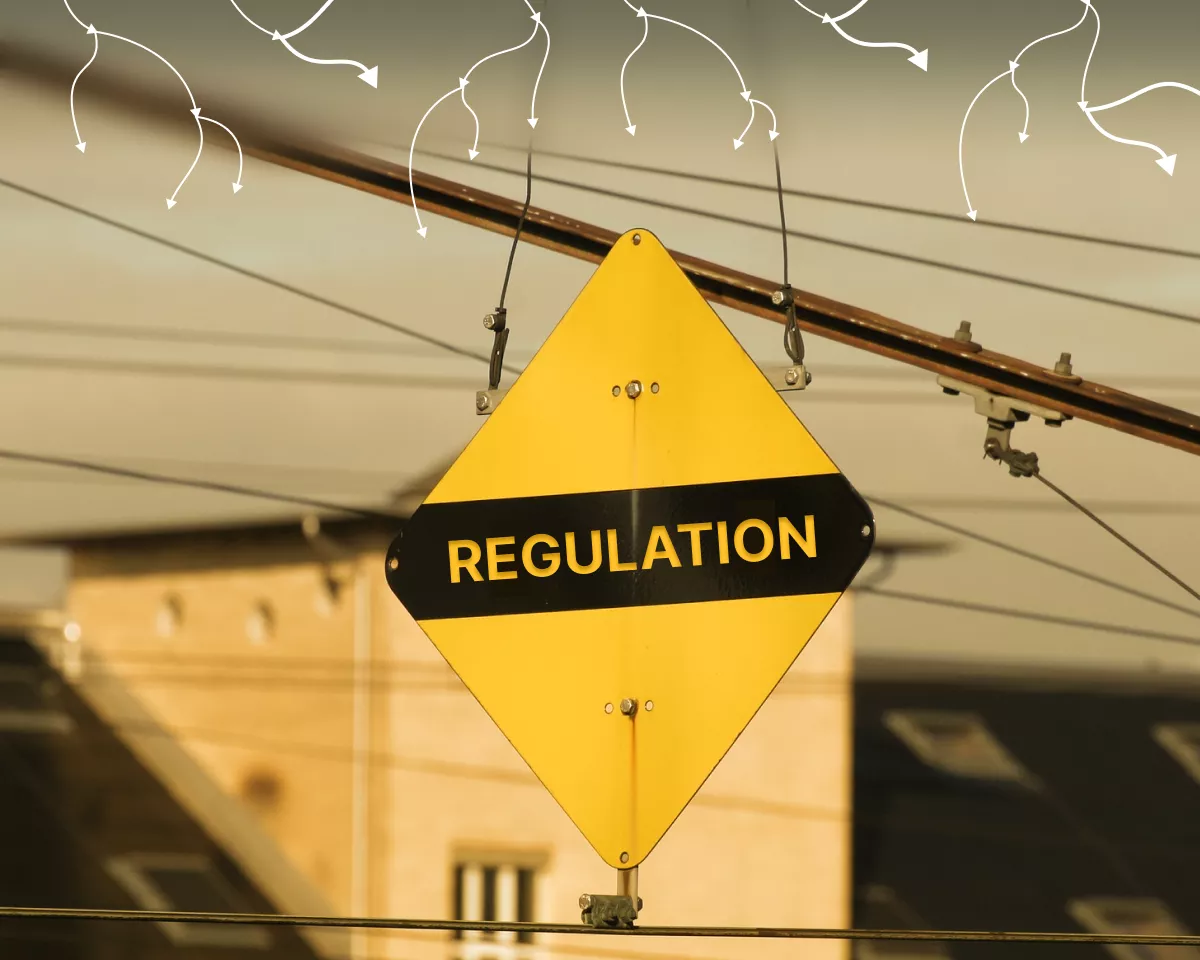 Ireland's Ministry of Finance has presented the country's first-ever comprehensive document aimed at combating money laundering and terrorist financing in the digital economy. This strategy marks a significant step in adapting national legislation to the realities of the modern crypto market, which is increasingly becoming the focus of close attention from regulators worldwide.
A key element of the new policy is the tightening of control over transactions involving private (non-custodial) crypto wallets...
Riot Platforms raises $573 million to build an AI campus in Texas
 American miner Riot Platforms continues its aggressive expansion into high-performance computing. The company has closed a deal to secure project debt financing of up to $573 million. The funds will be directed toward purchasing equipment and developing a 191 MW data center for artificial intelligence, which will be located on the site of Riot's existing campus in Rockdale, Texas.
Investment bank Morgan Stanley is acting as the administrative agent for the credit syndicate...
Galaxy Digital has lowered its forecast for the CLARITY Act: the odds of passage in 2026 are only 10%.
 Analysts at Galaxy Digital have revised their expectations regarding the fate of the CLARITY Act in the U.S. Senate, lowering the probability of its approval in 2026 to a modest 10%. This decision reflects growing concern over unresolved political disagreements that continue to stall the initiative's progress.
Two aspects remain key sticking points. First, ethical standards for government officials—an issue that sparks heated debate in both parties and requires fine-tuning...
Wall Street's closed blockchains are a "race to the bottom": Etherealize CEO denounces consortium networks
 Vivek Raman, co-founder and CEO of Etherealize, has sharply criticized Wall Street's growing infatuation with private, permissioned blockchains. In his view, this trend is not just misguided—it is dangerous for the entire industry.
Raman emphasizes that consortium networks, which major financial institutions are actively promoting, fragment liquidity and return us to isolated systems. This is precisely the isolation that blockchain was supposed to eliminate...
Withdrawal: How to quickly and safely get your assets
Main withdrawal methods: what to choose The modern market offers three main channels for receiving funds...
How to safely and profitably top up your cryptocurrency balance: strategies for investors
Key methods of depositing funds Today, there are several main methods, each with its own specifics...
San refutes the global nature of the Binance block: restrictions will only affect the EU and Britain
Justin Sun, founder of HTX (formerly Huobi), has issued an official statement aimed at calming panic among exchange users. According to him, HTX's inclusion on Binance's blacklist is not a global measure but a targeted restriction that applies exclusively to clients from the United Kingdom and the European Union. Notably, the Binance notification sent to users contains no mention of geographic targeting—it is addressed to all clients without exception...Russia is building two payment circuits: the new digital currency law separates domestic and foreign markets.
Transferring $200 abroad costs on average 6.4% of the amount, while a bank transfer costs almost 15%, and the payment message itself reaches the recipient bank in ten minutes. These figures, cited by digital economist Ravil Akhtyamov, only underscore the main problem: time and money are consumed not by data transmission, but by the "last mile"—compliance checks, reconciliations, and crediting at the local bank...Cryptoadvertising in Russia: services allowed, but not coins — analysis of the new rules
 The Russian digital asset market is entering a new era. The adopted law introduces targeted changes to advertising regulation, and for the first time in a long while, market participants are allowed to promote their services. However, it is important to understand: this is not about legalizing cryptocurrency advertising as such, but only about a strictly limited exception for licensed players.
What is allowed and what is prohibited The key point is the distinction between advertising the digital currency itself and advertising the services of professional participants...
The Central Bank limit of 300,000 rubles: legal loopholes for large investors
The market will set the price: why bank spreads on cryptocurrency in Russia are doomed to decline
With the start of cryptocurrency banking operations in Russia, spreads will initially be noticeably higher than on classic crypto exchanges. However, as my analysis of market dynamics shows, no player will be able to sustain a markup of 5–7% or more in a competitive field. The only question is how quickly the market will adjust these figures.The key factor that will determine the price for the client is not so much the bank's appetite for profit, but rather the real cost of liquidity...
Largest theft from hardware wallets: Coldcard vulnerability cost BTC holders $112 million
A large-scale incident involving Coldcard hardware wallets has shaken the crypto community: attackers withdrew at least 1,778.84 BTC, equivalent to $112.7 million. According to my analysis of data obtained during the investigation, the attack affected more than 8,600 addresses, and this is far from the limit — taking into account unconfirmed episodes, the actual damage could reach 2,417.35 BTC (~$153 million)...Ireland tightens the rules: new AML strategy to hit private crypto wallets and gambling
Ireland's Ministry of Finance has presented the country's first-ever national strategy to combat money laundering (AML) and terrorist financing (CFT). This document marks a systemic shift in the regulator's approach to digital assets, and I see in it a clear signal for the entire market: the era of anonymity in this jurisdiction is coming to an end.Key changes for the crypto industry The strategy introduces three fundamentally important directions...
Riot Platforms raises $573 million to build an AI campus in Texas: a bet on diversification
Riot Platforms, one of the leading players in the bitcoin mining sector, has taken a decisive step toward expanding its infrastructure base. The company has secured project debt financing of up to $573 million, which will be directed toward purchasing high-tech equipment and developing a 191 MW data center designed for artificial intelligence needs. The facility is located on Riot's campus in Rockdale, Texas, which has already established itself as a strategic hub for energy-intensive operations...Galaxy Digital has lowered the odds of the CLARITY Act being passed in the U.S. to 10%.
Galaxy Digital analysts have significantly revised their forecasts regarding the fate of the CLARITY Act in the U.S. Senate. The probability of the bill being approved in 2026 is now estimated at just 10%. This is a notable decline from previous expectations, reflecting the growing complexity of the political landscape surrounding cryptoasset regulation in the United States.Key obstacles remain unresolved disagreements over a number of fundamental provisions in the document...
Etherealize CEO: Wall Street's Closed Blockchains Are a 'Race to the Bottom' and a Step Backward for the Entire Industry
Crypto asset withdrawal: a strategic breakdown of the procedure and key risks
How to Safely and Quickly Top Up a Cryptocurrency Account: A Complete Analyst's Guide
Topping up a cryptocurrency account is one of the most common operations for users of crypto exchanges and wallets. However, despite its apparent simplicity, many users make mistakes that lead to loss of funds or delays in crediting. In this guide, we will break down the main methods of topping up, their advantages and disadvantages, as well as key security rules.
Main Methods of Topping Up a Cryptocurrency Account
- Bank card transfer (fiat) — the most accessible method for beginners. Most major exchanges support deposits in dollars, euros, and other currencies via Visa/Mastercard cards.
- Bank transfer (SEPA, SWIFT) — suitable for large amounts. It is characterized by lower fees but takes longer (from several hours to several days).
- Cryptocurrency transfer from another wallet or exchange — the most popular method among experienced users. Requires attention to the network used (ERC-20, TRC-20, BEP-20, etc.).
- P2P platforms — allow you to buy cryptocurrency directly from other users, often with better rates and without the risk of card blocking.
- Cryptocurrency ATMs and exchange offices — a convenient way to deposit cash, but with high fees (3–10%).
Step-by-Step Algorithm for Safe Topping Up
- Verify the address. Always copy the deposit address from the official exchange website or app. Check the first and last characters of the address before sending.
- Check the network. Make sure the network you choose (for example, TRC-20 for USDT) matches the network supported by the receiving platform. Sending via the wrong network may result in loss of funds.
- Start with a small amount. Before transferring a large sum, send a test transaction of a minimum amount to verify the correctness of the address and network.
- Use two-factor authentication (2FA). Enable 2FA on your account to protect against unauthorized access.
- Check the minimum deposit amount and fees. Some platforms set minimum limits and commissions that may make small deposits unprofitable.
Comparison of Topping Up Methods
| Method | Speed | Fees | Security |
|---|---|---|---|
| Bank card | Instant | 1.5–5% | Medium (possible card blocking) |
| Bank transfer | 1–5 days | 0–1% | High |
| Crypto transfer | From 1 minute to 1 hour | Network fee (0.1–5 USD) | High (if the network is chosen correctly) |
| P2P | From 5 minutes | 0–2% | Medium (depends on the counterparty) |
| ATM/exchange office | From 10 minutes | 3–10% | Medium |
Common Mistakes and How to Avoid Them
Mistake 1: Sending funds via the wrong network. For example, sending USDT via the Ethereum network (ERC-20) to an address that only supports TRON (TRC-20). In most cases, funds can be recovered, but this requires time and additional fees. Solution: Always double-check the network before sending.
Mistake 2: Ignoring the memo/tag. Some cryptocurrencies (XRP, EOS, Stellar) require specifying a memo or tag when topping up. If it is missing, the funds may not be credited automatically. Solution: Always fill in the memo field if the platform requires it.
Mistake 3: Using unverified exchange offices. Fake exchange offices often steal funds. Solution: Use only official exchange services and check reviews on independent platforms.
Recommendations for Large Amounts
If you plan to deposit a significant amount, analysts recommend splitting it into several transactions and using different methods. This reduces risks associated with potential technical failures or security checks. It is also worth considering using cold wallets for long-term storage and only transferring the necessary amount to the exchange for trading.
Conclusion: Topping up a cryptocurrency account is a simple but responsible operation. Following the rules described above will help you avoid most typical mistakes and ensure the safety of your funds. Always prioritize security over speed, and remember: in the world of cryptocurrencies, the user is their own bank.
Main Top-Up Methods Today, there are several key ways to deposit funds into a trading account. Each of them has its own features, commission costs, and processing speed...
Justin Sun: Binance's Restrictions Against HTX Are a Targeted Strike, Not a Global Blockade
In his statement, Sun emphasized that HTX does not conduct operational activities in the UK or EU, and that negotiations with regulators in these jurisdictions are already underway...
Russia is building two payment systems: the digital ruble for domestic settlements and cryptocurrency for foreign trade.
The global financial system is undergoing a tectonic shift. While the US has legally banned a digital dollar for itself until 2030, Europe is only designing the digital euro, and the Bank for International Settlements is testing tokenized deposits in the Agorá project, Russia has taken its own unique path. The law "On Digital Currency and Digital Rights," signed on August 4, creates not one but two parallel payment systems with different regulatory rules...Cryptoadvertising in Russia: A new era of limited legalization of services, but not coins
The Central Bank limit of 300,000 rubles: how a large investor can legally expand horizons
The annual threshold of 300,000 rubles for purchasing cryptocurrency, set by the Central Bank, is not a death sentence for an investor with serious capital. The key nuance that many overlook is that the limit applies to each counterparty individually, rather than being summed across all of a client's transactions. This opens up a perfectly legal opportunity for diversifying deals.The mechanics are simple: an investor can distribute their purchases among several banks, brokers, and exchanges...
Competition will bring down bank spreads on cryptocurrency in Russia: analysts' forecast
The launch of cryptocurrency banking operations in Russia will be accompanied by inflated spreads, but maintaining a markup of 5–7% or higher in a competitive market will not be possible. This is my conclusion after analyzing market mechanisms and the experience of experts in transactional banking and payments.At the initial stage, banks will be forced to factor into the price for the client not so much a desire to profit, but rather real costs: the cost of liquidity, compliance procedures, risk hedging, and the creation of new infrastructure...