Largest theft from hardware wallets: Coldcard attack cost BTC holders $112 million
 A large-scale incident that shook the self-custody community resulted in the loss of at least 1,778.84 BTC — approximately $112.7 million at the current exchange rate. This involves a systematic attack on Coldcard hardware wallets that affected thousands of users worldwide.
Root of the problem: an error in entropy generation The attack began on July 30, 2026, when attackers started systematically recovering seed phrases generated by vulnerable devices...
Ireland tightens crypto regulation: new strategy to combat money laundering
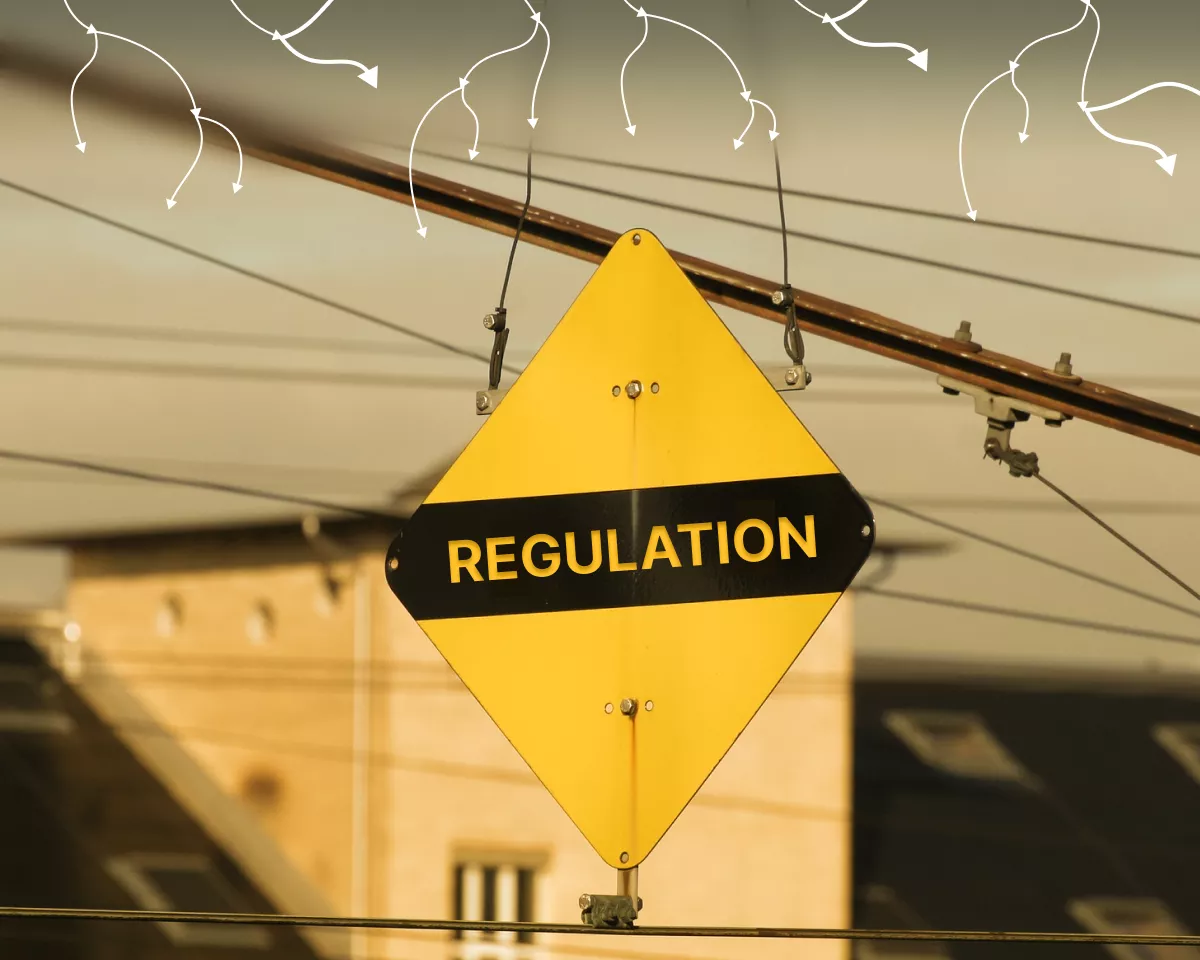 Ireland's Ministry of Finance has unveiled its first comprehensive national strategy aimed at combating money laundering (AML) and terrorist financing (CFT) in the cryptocurrency sector. This move marks a systematic approach by the regulator to integrate digital assets into the country's legal framework.
A key element of the document is the tightening of control over transactions using private (non-custodial) wallets...
Riot Platforms raises $573 million to build an AI campus in Texas: a bet on high-performance computing
 Major American miner Riot Platforms has signed an agreement for project debt financing of up to $573 million. The funds will be used to purchase equipment and develop a 191 MW data center for artificial intelligence located at the company's facility in Rockdale, Texas. This step clearly demonstrates the industry's strategic shift toward diversification beyond cryptocurrency mining.
The credit pool is led by Morgan Stanley, which serves as the administrative agent for the group of lenders...
Galaxy Digital has lowered its forecast for the CLARITY Act: the chances of passage in 2026 are estimated at 10%.
 Analysts at Galaxy Digital have revised their expectations regarding the fate of the CLARITY Act in the U.S. Senate, lowering the probability of its approval in 2026 to 10%. This is a significant drop compared to previous estimates, reflecting the growing complexity of the political landscape surrounding cryptoasset regulation.
Key obstacles remain unresolved issues related to ethical standards for government officials and controversial provisions on stablecoin yields...
Wall Street's closed blockchains — a "race to the bottom": Etherealize CEO accuses consortia of fragmenting liquidity
 In recent months, Wall Street has once again turned its attention to private blockchain networks, but this trend is drawing serious criticism from leading industry players. Vivek Raman, co-founder and CEO of Etherealize, in a recent interview called the growing popularity of consortium networks with restricted access a "race to the bottom" that undermines the fundamental principles of distributed ledger technology...
Withdrawal: Key Aspects of Liquidity Management in Cryptocurrency Operations
First and foremost, it is necessary to distinguish between types of withdrawals: fiat transfers to bank cards, stablecoin transactions, and transfers in native blockchain tokens...
How to Properly Top Up a Crypto Account: Expert Analysis of Key Methods and Risks
Topping up a crypto account is the first step for any user entering the world of digital assets. However, despite the apparent simplicity, this process has many nuances: from choosing a method to security issues. In this article, we will examine the main ways to fund a crypto account, their advantages and disadvantages, and also provide recommendations for minimizing risks.
Key Methods for Topping Up a Crypto Account
There are several main ways to fund a crypto account, each with its own characteristics:
- Bank card transfer — the most common method. It is suitable for beginners due to its simplicity and speed. However, it is important to consider that many banks may block transactions with crypto exchanges, and commissions can be significant.
- Bank transfer — suitable for large amounts. This method is characterized by lower commissions but takes more time (from several hours to several days).
- Cryptocurrency transfer from another wallet — the optimal option for those who already own digital assets. It is important to carefully check the network and address to avoid losing funds.
- P2P platforms — allow you to buy cryptocurrency directly from other users. This method offers flexible terms and often lower commissions, but requires caution when choosing a counterparty.
- Electronic payment systems — such as PayPal, Skrill, or WebMoney. Some exchanges support these methods, but their availability may be limited depending on the region.
Risks and How to Minimize Them
When topping up a crypto account, users may encounter the following risks:
- Blocking of transactions by banks — many financial institutions treat crypto operations with suspicion. To avoid this, it is recommended to use exchanges with a good reputation and notify the bank in advance about the transaction.
- Fraud on P2P platforms — always check the counterparty's rating, use the platform's escrow service, and avoid suspicious offers.
- Errors when entering the address — a single mistake can lead to the irretrievable loss of funds. Always double-check the address and use QR codes where possible.
- High commissions — some methods may involve significant fees. Compare conditions on different platforms before making a transaction.
- Security of personal data — use two-factor authentication (2FA) and never share your private keys or passwords with third parties.
Recommendations from Experts
To make topping up your crypto account as safe and profitable as possible, follow these tips:
- Choose reliable and regulated exchanges with a positive reputation.
- Start with small amounts to test the method before making large transactions.
- Keep records of all transactions and store confirmations.
- Use cold wallets for storing significant amounts of cryptocurrency.
- Stay updated on changes in legislation in your country regarding cryptocurrencies.
Topping up a crypto account is a process that requires attention and a responsible approach. By choosing the right method and following security measures, you can minimize risks and make your experience in the world of cryptocurrencies comfortable and safe.
Main ways to deposit funds The most common method is a direct transfer from an external wallet (for example, MetaMask, Ledger, or an exchange address)...
Sun refutes the global nature of Binance's restrictions on HTX: analysis of the statement and real risks
 HTX founder Justin Sun was quick to provide public clarifications regarding his exchange being added to Binance's "blacklist." In his statement made on Friday evening, just hours after the official notice from the competitor, Sun emphasized that the restrictions are narrowly targeted and affect exclusively users from the United Kingdom and the European Union.
According to him, he has already held talks with Binance representatives, who confirmed that the block is not global...
Digital ruble and crypto: Russia is building two parallel financial realities
 While the world debates the future of money, Russia has already made its move. This is not just about a new law, but about the formation of two isolated payment circuits: a public one for domestic settlements, and a private one for foreign trade operations. This is a fundamentally different approach from the US or Europe, and it deserves close attention from any market participant.
The key point is not the speed of message transmission...
Crypto Advertising in Russia: A New Era of Regulated Marketing or a Targeted Relaxation?
 Russian legislation is making a landmark but extremely cautious maneuver toward the digital assets industry. For the first time in a long while, advertising of cryptocurrency services is becoming legal, but only for a narrow circle of licensed players and with a host of caveats. This is not a "green light" for the entire industry, but rather a door cracked open for those willing to play by the establishment's rules...
The Central Bank's limit of 300,000 rubles: how a large investor can legally bypass the restriction
 The annual limit of 300,000 rubles on cryptocurrency purchases for non-qualified investors is not a verdict, but rather a formality that can be bypassed completely legally. The key nuance that many overlook is that the restriction is set for each counterparty separately, not cumulatively. This means that an investor with significant capital can distribute their transactions among several banks, brokers, and exchangers without violating any regulatory norms...
Banking spreads on cryptocurrency in Russia: why high fees are a temporary phenomenon
 The Russian market for banking operations with digital assets is just beginning to take shape, and the first steps of credit institutions in this niche will be accompanied by inflated spreads. However, as my analysis of market dynamics shows, banks simply will not be able to maintain margins at 5–7% or higher under healthy competition. It is a matter of time and the number of players.
Why starting spreads will be high, but not for long At the initial stage, banks are forced to factor into the client price not only the desired profit, but also the costs of liquidity, hedging, compliance, and building new infrastructure...
Largest theft from hardware wallets: Coldcard attack cost users $112 million
A large-scale incident involving Coldcard hardware wallets has led to losses of at least 1778.84 BTC, equivalent to approximately $112.7 million. My colleagues at Galaxy Research have recorded that after August 6, there have been no new confirmed cases of hacking, but the full picture of the damage is still taking shape.Attack Mechanics: The Root of the Problem Lies in the 2021 Firmware Through careful analysis, I was able to determine that attackers systematically recovered seed phrases generated by vulnerable devices...
Ireland tightens crypto regulation: new AML strategy hits private wallets
Ireland's Ministry of Finance has presented the country's first-ever comprehensive plan to combat money laundering and terrorist financing, directly impacting the cryptocurrency industry. This step is not merely a formality but a signal of a shift from fragmented measures to systematic pressure on anonymity in digital assets.What exactly changes for the crypto industry The key blow targets private (non-custodial) wallets...
Riot Platforms raises $573 million to build an AI campus in Texas: a strategic move or a risk?
Riot Platforms, one of the leading players in Bitcoin mining, is making an ambitious move by securing project debt financing of up to $573 million. The funds will be directed toward purchasing high-tech equipment and developing a 191 MW data center for artificial intelligence located at the company's site in Rockdale, Texas. This is not just another investment—it is a signal of a deep transformation of the business model in the post-halving reality...Galaxy Digital has lowered its forecast for the CLARITY Act: the chances of passage in 2026 are estimated at 10%.
Galaxy Digital's analytical department has revised its estimates regarding the fate of the CLARITY Act in the U.S. Senate, lowering the probability of its approval to 10% in 2026. This decision reflects the deep disagreements that continue to stall the initiative's progress, despite its importance for regulating the cryptocurrency market.Key sticking points remain unresolved political issues, particularly ethical standards for government officials and controversial provisions concerning stablecoin yields...
Wall Street's closed blockchains — a "race to the bottom": Etherealize CEO on the dead end of consortium networks
The wave of Wall Street interest in closed blockchain networks with restricted access is a strategic mistake that is leading the industry toward isolation and fragmentation. This position was voiced by Vivek Raman, co-founder and CEO of Etherealize, who called what is happening a "race to the bottom."In my firm belief, this is an accurate diagnosis of the problem. The consortium networks that major financial institutions are now actively promoting replicate exactly the architecture that blockchain was supposed to move away from...
Withdrawing funds from crypto exchanges: a strategy for security and liquidity management
Key aspects of the procedure First of all, it is important to understand that the withdrawal process is not instantaneous...
How to top up your balance on a crypto exchange: safe methods and common mistakes
Main methods of depositing funds Today, there are three key channels for deposits...
San and Binance: Geopolitical nuance in the HTX blacklist and what it means for users
Cryptoreform in Russia: two payment circuits instead of one — a new reality for the market
Russia opens the door for advertising crypto services, but coins remain illegal
Russia's digital asset market is taking a cautious step forward: a new law for the first time permits advertising of services by licensed crypto market participants. However, direct marketing of cryptocurrencies themselves—from bitcoin to altcoins—remains banned. This is a key nuance that changes the rules of the game for the entire industry.For a long time, cryptocurrency advertising in Russia was under a de facto veto...
The Central Bank limit of 300,000 rubles: a legal strategy for distributing transactions for large investors
The annual threshold of 300,000 rubles for purchasing cryptocurrency, set by the Central Bank, applies to each individual counterparty, not as an aggregate limit for the investor. This opens up a legal opportunity to distribute capital across multiple banks, brokers, and exchange platforms.For most non-qualified investors, the established amount is quite sufficient to meet basic needs. However, those who operate with more significant volumes of funds can take advantage of a transaction splitting strategy...
Competition will bring down banking spreads on cryptocurrency in Russia.
The launch of cryptocurrency banking operations in Russia will be accompanied by inflated spreads, but this is a temporary phenomenon. In the long term, maintaining a markup of 5–7% or higher in a competitive market will not be possible. The key factor will not be banks' desire to profit, but the real cost of liquidity, clients' willingness to pay for a regulated framework, and the difference compared to traditional fiat transfer channels...The biggest blow to self-custody: the Coldcard hack resulted in the loss of 1778 BTC
The attack on Coldcard hardware wallets, which I previously warned about in my analytical reports, has turned into a catastrophe for bitcoin holders. According to my data, the confirmed damage amounts to at least 1,778.84 BTC, equivalent to $112.7 million. Notably, no new cases of compromise have been recorded since August 6, indicating that the active phase of the attack has concluded.Anatomy of the Attack: The Root of the Problem in the 2021 Firmware My analysis shows that the incident began on July 30, 2026...
Ireland tightens AML regulation: a new blow to private crypto wallets
Ireland's Ministry of Finance has presented its first national strategy to combat money laundering and terrorist financing (AML/CFT). This document is not just a formality, but a clear signal to the market: the country intends to systematically tighten the screws in the cryptocurrency sector, with an emphasis on transparency and control.The key innovations hit the industry's pain points precisely...
Riot Platforms raises $573 million to build an AI campus in Texas: a new era of mining
Riot Platforms, one of the leading players in the bitcoin mining sector, has taken a decisive step toward diversifying its business. The company has secured project debt financing of up to $573 million, which will be directed toward purchasing high-tech equipment and developing infrastructure for artificial intelligence (AI) at its campus in Rockdale, Texas. The capacity of the new data center will reach an impressive 191 MW, underscoring Riot's ambitions in the race for leadership in high-performance computing...Galaxy Digital has lowered its forecast for the CLARITY Act: the chances of passage in 2026 are estimated at 10%.
Galaxy Digital analysts have revised their forecast regarding the fate of the CLARITY Act in the U.S. Senate, lowering the probability of the bill's approval in 2026 to 10%. This is a significant drop compared to previous estimates, reflecting the growing complexity of the legislative process and political obstacles that are becoming increasingly apparent.Key factors driving such a pessimistic scenario include unresolved disputes over ethical standards for government officials and provisions concerning stablecoin yields...
Wall Street's closed blockchains are a "race to the bottom": Etherealize's head explains why institutions are choosing the wrong path
In recent months, we have been witnessing a troubling trend: the largest financial institutions on Wall Street are increasingly turning their attention to closed blockchain networks with restricted access. However, as I have repeatedly emphasized in my analytical materials, this path leads to a dead end. Vivek Raman, CEO of Etherealize, expressed an extremely clear position in a recent conversation with industry colleagues: consortium networks are not evolution, but degradation...